Blog

Torneos y partidas de póker en Slotuna Casino para rivales reales

Torneos Y

Torneos y partidas de póker en Slotuna Casino para rivales reales

Entrar a una sala de póker online tiene algo distinto a abrir una tragamonedas. En una slot puedo probar unos giros, mirar el ritmo y decidir si sigo, pero en el póker cada mano incluye a otras personas que están tomando decisiones al mismo tiempo. Esa diferencia fue lo primero que noté al explorar Slotuna casino, especialmente al pasar de la sección general del casino a las partidas donde hay rivales reales detrás de cada asiento virtual.

Yo esperaba encontrar un entorno bastante mecánico, casi como jugar contra un patrón repetido, y no fue así. Hubo manos en las que un jugador subía con mucha frecuencia, otras en las que alguien desaparecía de la acción durante varias rondas y, de pronto, hacía una apuesta incómodamente grande. Puede que algunas conductas fueran simples casualidades, claro, pero el detalle interesante es que obligan a pensar. No basta con saber qué cartas tengo.

Mi primera sesión fue una partida de apuestas bajas. Recuerdo que tenía una taza de café ya fría al lado del portátil y que tardé más de lo previsto en elegir mesa. Parece una decisión menor, aunque no lo es. El número de jugadores, las ciegas y el nivel de movimiento visible cambian mucho la experiencia. En una mesa tranquila pude observar; en otra, con más subidas preflop, sentí que llegaba tarde a cada decisión.

La parte que más valoré fue poder alternar entre partidas de dinero y torneos sin perder de vista una idea sencilla: en póker, el rival también está intentando interpretar mis decisiones. Ese pequeño detalle vuelve cada mano menos automática.

Formatos de póker que encontré

Antes de jugar, dediqué un rato a distinguir los formatos disponibles. Me pareció sensato porque el error más común, al menos en mi caso, es entrar en una mesa pensando que cualquier partida de Texas Hold’em se juega igual. El reglamento básico se mantiene, sí, pero el ritmo y el objetivo cambian bastante entre una mesa de efectivo y un torneo con eliminaciones.

  1. Las partidas de efectivo me parecieron más flexibles. Se puede entrar con una cantidad elegida, jugar unas cuantas manos y salir cuando uno considera oportuno. Para practicar sin la presión de una clasificación, me resultaron bastante cómodas.
  2. Los torneos tienen una tensión más gradual. Las ciegas suben, el margen para esperar una mano premium se encoge y el tamaño del stack comienza a importar tanto como las cartas.
  3. Los formatos de mesas cortas, con menos participantes, aceleran todo. Hay más manos jugables en apariencia, pero también más ocasiones para equivocarse con confianza excesiva.

En mi opinión, empezar por límites bajos y por estructuras que se entiendan bien es preferible a perseguir el torneo más grande de la pantalla. No suena muy emocionante, quizá, pero ayuda. Una mesa barata puede revelar muchos hábitos personales: entrar demasiado, pagar por curiosidad o intentar recuperar una mano perdida con una apuesta que no tiene mucho sentido.

También me gustó que el lobby permitiera revisar datos básicos antes de sentarme. No convierto esas cifras en una ciencia exacta, porque una mesa puede cambiar en cinco minutos, pero sirven de orientación. Si veo demasiada actividad para lo que quiero jugar ese día, prefiero escoger otra opción. A veces la mejor decisión de póker ocurre antes de repartir la primera carta.

Leer la mesa sin inventar historias

La lectura de mesa es probablemente el aspecto que más me costó entender. Al principio atribuía intenciones muy precisas a cada apuesta. Si un rival pagaba rápido, pensaba que tenía un proyecto. Si tardaba, imaginaba una mano fuerte. Con el tiempo comprendí que la velocidad de juego online puede depender de muchas cosas, desde una mala conexión hasta que alguien está participando en otra mesa.

Leer La

Ahora intento fijarme en patrones más amplios y menos teatrales. Por ejemplo, observo cuántas manos juega una persona desde posiciones tempranas, cuándo decide resubir y cómo reacciona al llegar el flop. No siempre encuentro respuestas claras. De hecho, a veces la información se contradice, y ahí está buena parte de la dificultad.

  • La posición desde la que participa un rival suele decir más que una apuesta aislada.
  • El tamaño de las apuestas puede revelar inseguridad, valor o simplemente una costumbre repetida.
  • Los cambios bruscos de conducta merecen atención, aunque no justifican una suposición definitiva.
  • Mis propias cartas siguen siendo el punto de partida, no una excusa para perseguir cada posible farol.

Hubo una mano concreta que me dejó una lección bastante clara. Llevaba pareja media y un jugador que hasta entonces había sido prudente hizo una apuesta grande en el turn. Mi impulso era pagar porque el bote ya parecía importante. Me detuve unos segundos, revisé la secuencia y abandoné. Nunca sabré si era un farol, pero después pensé que no necesitaba demostrar nada. Esa sensación de no conocer el desenlace resulta rara al comienzo, aunque forma parte del juego.

Decisiones bajo presión en los torneos

Un torneo de póker cambia de carácter cuando las ciegas suben. Durante los primeros niveles puedo permitirme esperar, comparar manos y tomar notas mentales. Más tarde, con un stack reducido, la misma paciencia puede convertirse en pasividad. Fue en esa etapa donde noté la presión de verdad, incluso jugando desde casa y sin nadie mirando por encima de mi hombro.

La presión no siempre se presenta como nervios. A veces aparece como prisa. Vi una oportunidad de empujar fichas con una mano aceptable, no excelente, porque el temporizador bajaba y temía quedarme corto. En otra ocasión hice lo contrario, esperé demasiado y terminé con pocas ciegas para generar respeto. Ninguna de las dos experiencias fue agradable, pero las dos me ayudaron a ajustar el criterio.

  1. Primero reviso el tamaño de mi stack respecto a las ciegas. No es igual tener veinte ciegas que tener seis, aunque las cartas sean parecidas.
  2. Después miro quién queda por actuar. Un movimiento desde posición final puede funcionar con más manos que desde los primeros asientos.
  3. Por último, intento decidir antes de que el reloj me empuje. Si necesito unos segundos, los uso, pero evito convertir cada mano en una agonía.

Me parece importante aceptar que no todas las decisiones correctas terminan bien. En una mesa real, la varianza no desaparece porque uno haya calculado con cuidado. Eso puede frustrar bastante. Aun así, prefiero perder una mano después de tomar una decisión razonable que ganar por pura impulsividad y aprender una lección equivocada.

Ritmo, banca y errores que preferiría no repetir

Al jugar póker en un casino online, la gestión del dinero no debería ser una idea secundaria. Sé que se repite mucho, pero lo entendí mejor después de inscribirme en un torneo con una entrada algo mayor de la que me resultaba cómoda. No fue una cantidad desastrosa, ni mucho menos, pero me hizo jugar con una rigidez extraña. Cada ciega perdida parecía personal.

Desde entonces separo el presupuesto de entretenimiento y establezco un límite previo para la sesión. Si lo alcanzo, cierro la mesa. Suena fácil al escribirlo y no siempre lo es cuando una mala mano deja la impresión de que la siguiente compensará todo. Esa idea puede ser especialmente peligrosa porque el póker ofrece explicaciones tentadoras para seguir, y no todas son buenas.

  • Evito subir de nivel solo después de una victoria rápida.
  • No persigo pérdidas en una mesa más cara.
  • Hago pausas cuando noto que estoy jugando por irritación y no por criterio.
  • Considero los bonos o promociones como un extra, no como dinero que debo recuperar.

Otro error fue jugar demasiadas mesas al mismo tiempo apenas me sentí cómodo. Pensé que aumentaría la diversión y, en cierto modo, la aumentó durante diez minutos. Después empecé a confundir tamaños de bote, posiciones y decisiones pendientes. Reducir el número de mesas fue una mejora inmediata. Quizá alguien más experimentado maneje varias sin problemas, pero yo prefiero entender una mano completa antes que sobrevivir a cuatro a la vez.

Mi experiencia general en la sala de póker

La experiencia de póker dentro de Slotuna Casino me pareció más interesante cuando la traté como una actividad de estrategia y entretenimiento, no como una forma de obtener resultados predecibles. La navegación hacia las mesas fue clara en mi caso, y agradecí poder revisar los formatos antes de comprometer una entrada. Para un jugador nuevo, esos detalles reducen una parte de la incertidumbre inicial.

También diría que el ambiente depende muchísimo de la mesa elegida. Algunas partidas se sienten lentas, casi meditativas. Otras exigen una respuesta constante y pueden agotar rápido. No considero que una opción sea objetivamente mejor, depende de la hora, del ánimo y del nivel de atención que uno tenga. En mi caso, las sesiones más cortas acabaron siendo las más disfrutables.

La verdadera diferencia frente a otros juegos de casino está en que aquí hay espacio para mejorar, aunque nunca haya garantías. Se puede aprender a seleccionar manos, a valorar la posición, a identificar rangos aproximados y a retirarse a tiempo. Nada de eso elimina la suerte, pero hace que cada partida tenga una capa adicional. Para mí, ahí está el atractivo.

Reseñas finales

Después de varias sesiones, mi impresión es positiva con algunos matices normales. Me gustó la variedad de formatos y el componente humano de enfrentarse a rivales reales, especialmente en torneos donde las decisiones pesan más conforme avanzan los niveles. Al mismo tiempo, no recomendaría entrar con prisa ni con expectativas irreales. El póker recompensa la atención, pero también pone a prueba la paciencia.

  • Valoración personal de los torneos: dinámicos, tensos y más interesantes cuando se entiende la estructura.
  • Valoración de las mesas de efectivo: útiles para practicar y controlar mejor la duración de una sesión.
  • Valoración de la experiencia general: adecuada para quien busca decisiones reales, no solo resultados inmediatos.

Volvería a jugar, aunque probablemente mantendría el mismo enfoque prudente. Una mano llamativa puede quedarse en la memoria, pero lo que más me llevé fue algo menos espectacular: observar antes de actuar suele ser útil, incluso cuando parece que todos los demás ya han decidido.

Programa VIP Goldbet Casino – niveles, ventajas y acceso preferente

Programa Vip

Programa VIP Goldbet Casino, niveles, ventajas y acceso preferente

Cuando los jugadores se registran en un casino online, lo habitual es que primero miren los juegos, el bono de bienvenida o la rapidez de los pagos. El programa de fidelidad queda un poco al margen, casi como una pestaña secundaria. Sin embargo, con el tiempo muchos descubren que ese apartado puede condicionar bastante la experiencia. En plataformas como Goldbet, los usuarios que mantienen una actividad frecuente suelen encontrar una estructura VIP pensada para diferenciar a quienes juegan de vez en cuando de quienes convierten el casino en una rutina más constante.

El llamado programa VIP Goldbet Casino suele despertar curiosidad porque mezcla recompensas visibles, como promociones o devoluciones, con otras más discretas: atención prioritaria, comunicaciones antes que el resto de usuarios y, en algunos casos, un gestor asignado. No todos valoran estas ventajas del mismo modo. Algunos jugadores dicen que los bonos son el principal atractivo; otros, especialmente quienes ya han pasado por varios operadores, consideran que poder resolver una incidencia sin esperar demasiado tiene bastante más valor que unos giros adicionales.

Una idea importante: un nivel VIP no debería entenderse como una invitación a gastar más. Para la mayoría de usuarios responsables, funciona mejor como una consecuencia de una actividad que ya tenían prevista, con depósitos y límites personales claramente definidos.

Cómo suele funcionar el programa VIP en Goldbet Casino

Los programas de lealtad de casino rara vez son idénticos de una marca a otra, aunque comparten una lógica reconocible. Los jugadores realizan apuestas en títulos elegibles, acumulan puntos o volumen de actividad y, al llegar a ciertos objetivos, avanzan dentro de una escala. En la práctica parece sencillo. Lo que genera dudas está en los detalles: qué juegos cuentan, a qué ritmo se suman los puntos, si el nivel se conserva y qué beneficios concretos cambian al pasar de categoría.

En un entorno como Goldbet Casino, el usuario nuevo normalmente empieza en el tramo básico. No suele necesitar una solicitud especial para aparecer dentro del programa, ya que la participación puede vincularse a la cuenta verificada y al uso ordinario del casino. Aun así, el operador puede aplicar criterios específicos según el mercado, las campañas vigentes o el tipo de juego. Por eso los jugadores más meticulosos revisan la sección promocional antes de asumir que una sesión de ruleta, tragaperras o casino en vivo computará exactamente igual.

Muchos se encuentran con una realidad menos espectacular de lo que prometen algunos anuncios. Subir de nivel puede llevar tiempo, sobre todo si se apuesta de forma moderada. Y eso no necesariamente es malo. De hecho, varios usuarios experimentados consideran saludable que la progresión sea gradual, porque evita que el sistema se interprete como una carrera. La fidelidad, según esa visión, debería premiar la permanencia, no empujar a una conducta impulsiva.

La mecánica detrás de los puntos

Por regla general, el casino asigna valor a la actividad elegible. Cada operador establece sus equivalencias y puede distinguir entre categorías. Las tragaperras suelen tener un peso relevante porque tienen un margen de contribución diferente al de juegos de mesa o mesas en directo. Esto significa que apostar la misma cantidad en dos productos distintos no siempre ofrece la misma progresión dentro del plan VIP.

La palabra contribución aparece con frecuencia en las condiciones. A algunos recién llegados les parece un término poco claro, pero es esencial. Describe cuánto cuenta una apuesta para desbloquear promociones o avanzar de categoría. Los usuarios que leen esta parte evitan una decepción bastante común: completar muchas rondas en un juego y descubrir que ese título aportaba menos de lo esperado al saldo de puntos.

Una recompensa no equivale a dinero libre

Otro punto que suele generar reacciones mezcladas es el formato de las recompensas. El jugador puede recibir saldo promocional, giros gratis, cashback o invitaciones a campañas concretas. Pero cada uno de esos elementos puede tener reglas de uso. El saldo de bono, por ejemplo, puede requerir una determinada cantidad de apuesta antes de convertirse en saldo retirable. Los giros pueden estar restringidos a una tragaperras determinada. Son detalles normales en el sector, aunque a veces se leen demasiado tarde.

Los jugadores que describen una experiencia más positiva no suelen ser quienes persiguen cada oferta disponible. Más bien son quienes entienden qué premio les resulta útil y dejan pasar el resto. Esa selección parece simple, pero cambia bastante la relación con el programa. Un bono que no encaja con los hábitos del usuario no es necesariamente una ventaja, por mucho que la cifra parezca atractiva al principio.

Niveles, puntos y la sensación de avanzar

Niveles Puntos

El atractivo emocional de un programa VIP está bastante claro. Ver una barra avanzar, desbloquear una categoría o recibir una notificación de bienvenida al nuevo nivel ofrece una sensación de progreso. Algunos jugadores lo disfrutan como si fuera una extensión del propio catálogo de juegos. Otros no le prestan mucha atención hasta que reciben un correo con una ventaja concreta. Hay perfiles muy distintos, y el diseño suele intentar cubrir a todos.

La denominación de los niveles puede cambiar con el tiempo, al igual que el número de escalones. A continuación aparece una representación orientativa de cómo suelen organizarse los tramos dentro de un programa de casino. No sustituye la información publicada por el operador, pero ayuda a visualizar qué esperan normalmente los usuarios en cada fase.

Tramo habitual Qué suele ocurrir Percepción de los jugadores
Inicial Acceso a promociones generales y acumulación de puntos. Se ve como una primera toma de contacto, sin demasiadas diferencias visibles.
Intermedio Ofertas más segmentadas, posibles regalos o cashback ocasional. Empieza a notarse una atención menos genérica.
Avanzado Prioridad en campañas, límites operativos potencialmente más ágiles y soporte reforzado. Los usuarios habituales valoran más la comodidad que el efecto visual del nivel.
VIP alto Contacto personalizado y propuestas adaptadas al perfil, si el operador las ofrece. Se percibe como un servicio más directo, aunque las expectativas suelen ser mayores.

Una cuestión que sorprende a algunos usuarios es la posible revisión de categoría. En muchos programas, mantener un nivel puede depender de conservar cierta actividad durante un periodo. No siempre se comunica con el mismo énfasis que el ascenso, y ahí aparece una pequeña frustración. Un jugador puede celebrar llegar a un tramo elevado y, meses después, comprobar que su cuenta ha vuelto a un nivel anterior por no cumplir las condiciones de mantenimiento.

La lectura razonable es bastante sencilla: el nivel VIP tiene valor si encaja con una actividad sostenible. Cuando se convierte en un objetivo por sí mismo, pierde parte de su sentido. Los programas más apreciados son aquellos que premian sin crear la sensación de que hay que perseguir el siguiente escalón a toda costa.

Ventajas que los jugadores suelen notar de verdad

Hay beneficios que quedan bien en una página promocional y otros que realmente cambian una sesión o una gestión de cuenta. Los usuarios con más recorrido suelen separar ambas cosas con bastante rapidez. Un regalo de cumpleaños puede ser agradable, claro, pero la posibilidad de obtener respuestas rápidas cuando falta una verificación o hay una consulta sobre un retiro suele tener un impacto más práctico.

En los niveles superiores, las ventajas pueden ir desde promociones ajustadas a determinados tipos de juego hasta canales de soporte más rápidos. No todos los usuarios recibirán exactamente las mismas propuestas. El operador puede analizar la actividad previa, los juegos preferidos y la frecuencia de uso. Esta personalización tiene defensores y detractores. Algunos la agradecen porque evita recibir promociones irrelevantes; otros prefieren campañas claras e iguales para todos, sin demasiada segmentación.

Atención: las promociones VIP pueden estar sujetas a requisitos de apuesta, importes máximos de retirada, fechas de vencimiento y restricciones por juego. Antes de activar una oferta, los usuarios prudentes revisan esas condiciones, incluso cuando el premio llega de forma exclusiva.

Bonos, cashback y regalos con matices

El cashback suele ser una de las ventajas que más interés despierta. A diferencia de un bono clásico, ofrece una devolución parcial basada en pérdidas netas o actividad elegible durante un periodo determinado. Sobre el papel resulta fácil de entender, pero el porcentaje, la frecuencia y las reglas de liberación cambian mucho de una promoción a otra. Hay jugadores que lo consideran más transparente que los giros gratis; otros opinan que su utilidad depende por completo de si el importe llega como efectivo o como bono sujeto a requisitos.

También pueden aparecer torneos privados, sorteos, invitaciones temáticas o regalos puntuales. Son extras que generan conversación entre los usuarios VIP, especialmente cuando están ligados a eventos deportivos o estrenos de nuevos juegos. Aun así, no todos los jugadores buscan ese tipo de reconocimiento. Para una parte del público, la ventaja ideal sigue siendo una experiencia sencilla: depósitos procesados sin incidencias, información clara y retiros gestionados conforme a los plazos anunciados.

  • Promociones adaptadas al historial de juego y a campañas vigentes.
  • Posibles devoluciones, giros o créditos promocionales en fechas seleccionadas.
  • Atención prioritaria para consultas sobre cuenta, pagos o verificaciones.
  • Acceso anticipado a algunas acciones comerciales, torneos o comunicaciones.

Esta lista describe beneficios que suelen asociarse al estatus VIP, pero no debe leerse como una promesa fija. Las condiciones publicadas por Goldbet Casino son las que definen el alcance real de cada incentivo. Los jugadores que han tenido experiencias más tranquilas suelen adoptar una costumbre útil: guardar el correo promocional, abrir los términos y comprobar el plazo antes de pulsar el botón de activación.

Acceso preferente, gestores y una atención distinta

Acceso Preferente

El acceso preferente es una expresión amplia. Para algunos jugadores significa entrar a promociones antes que la mayoría. Para otros se traduce en una cola de soporte más corta o en la posibilidad de comunicarse con una persona que ya conoce el historial de la cuenta. Es en este punto donde los programas VIP suelen dejar de parecer un sistema automático de puntos y se convierten, al menos en parte, en un servicio.

Cuando existe un gestor VIP, su función no debería confundirse con la de un asesor financiero ni con alguien que impulse al usuario a jugar. En una experiencia bien gestionada, ese contacto ayuda a aclarar campañas, resolver dudas operativas y orientar al jugador hacia los canales correctos. Algunos usuarios valoran que el trato sea más directo; otros prefieren mantener toda la comunicación por chat o correo y conservar una distancia clara. Ambas posturas son totalmente normales.

También hay algo menos visible: la prioridad no siempre garantiza una respuesta instantánea. En fechas con alta actividad, como grandes eventos deportivos o campañas especiales, incluso los canales preferentes pueden experimentar demoras. Quienes han usado estos servicios suelen aceptar ese matiz siempre que el operador informe con honestidad y no convierta la etiqueta VIP en una promesa exagerada.

Situación habitual Usuario estándar Usuario con acceso preferente
Consulta sobre una promoción Utiliza los canales generales disponibles. Puede recibir una respuesta más contextualizada o una vía prioritaria.
Incidencia de verificación Entrega documentos y espera la revisión correspondiente. Puede tener seguimiento adicional, sin saltarse controles obligatorios.
Nueva campaña La conoce cuando se publica o se envía de forma general. Podría recibir una invitación o información anticipada.

La diferencia, como muestra la tabla, no debería consistir en evitar procesos de seguridad. La verificación de identidad, la prevención de fraude y las revisiones de pagos siguen siendo necesarias para todos. El trato preferente puede agilizar la comunicación, pero no elimina controles que protegen tanto al operador como al usuario. Este punto conviene tenerlo presente, porque algunas expectativas alrededor de los niveles altos son poco realistas.

Requisitos, límites y la importancia de leer antes de activar

El programa VIP puede parecer intuitivo, pero las condiciones son la parte que determina la experiencia. Un jugador puede fijarse en una cifra de cashback y olvidar revisar si se calcula sobre pérdidas netas, sobre qué periodo se aplica o qué productos quedan fuera. Puede ocurrir también que un regalo tenga una vigencia breve. Nada de eso es necesariamente problemático, aunque sí requiere atención.

Los usuarios prudentes suelen comprobar varios elementos antes de considerar una oferta como una ventaja real. Revisan si hay requisitos de apuesta, si existe un límite máximo de conversión, qué métodos de pago participan y si una promoción afecta a un retiro pendiente. Este último punto provoca dudas con cierta frecuencia. En algunos casinos, aceptar bonos puede cambiar temporalmente las condiciones de una retirada o exigir que se complete la promoción antes de cancelarla.

Una práctica sensata: establecer límites de depósito, de tiempo o de pérdidas antes de jugar ayuda a que el programa VIP se mantenga como un extra y no como una presión. Si la actividad deja de resultar cómoda, el acceso preferente pierde toda relevancia.

El juego responsable no es una nota pequeña que deba aparecer al final de una promoción. Es el marco necesario para interpretar todo lo demás. Los jugadores que han mantenido una relación equilibrada con el casino suelen hablar de los niveles VIP con más calma: los disfrutan cuando llegan, pero no cambian su presupuesto para alcanzarlos. Quizá esa sea la forma más razonable de mirar cualquier programa de fidelidad.

Qué conviene revisar en los términos

Antes de participar en una campaña ligada al nivel VIP, normalmente merece la pena revisar el apartado de elegibilidad, el cálculo de puntos, la validez de los premios y el procedimiento para reclamar una recompensa. También es útil confirmar si el nivel se mantiene de forma permanente o se revisa por periodos. Un minuto de lectura puede evitar bastantes malentendidos después, especialmente cuando el premio parece muy generoso.

Algunos jugadores encuentran estas reglas demasiado extensas. Es una reacción comprensible. Sin embargo, un programa que explica bien sus límites suele inspirar más confianza que otro basado en frases ambiguas. La transparencia no hace que todas las condiciones resulten atractivas, pero permite decidir con más criterio. Y esa capacidad de decidir es, al final, más valiosa que un mensaje promocional llamativo.

Conclusión

Conclusión: el programa VIP Goldbet Casino puede resultar interesante para jugadores que ya utilizan la plataforma de forma habitual y responsable, sobre todo si valoran una atención más cercana, promociones segmentadas y posibles ventajas operativas. Los niveles, por sí solos, no convierten una experiencia de casino en algo mejor. Lo que realmente importa es que las condiciones sean claras, que los premios se entiendan antes de activarse y que el usuario no modifique sus límites personales para perseguir una categoría. Los jugadores más satisfechos suelen ser los que ven el estatus VIP como un complemento, no como una meta.

FAQ

¿El acceso al programa VIP requiere una invitación?

Depende de las reglas vigentes del operador. En algunos casos, los usuarios empiezan a acumular puntos automáticamente tras registrarse y jugar con dinero real. En otros, determinadas categorías o campañas pueden depender de una invitación, de criterios internos o de la actividad de la cuenta.

¿Todos los juegos ayudan igual a subir de nivel?

No necesariamente. Las tragaperras, los juegos de mesa y el casino en vivo pueden tener porcentajes de contribución distintos. Los jugadores que desean entender su avance deberían consultar las condiciones del programa y las reglas de cada promoción concreta.

¿Un jugador VIP puede retirar dinero más rápido?

El acceso preferente puede mejorar la atención y el seguimiento de una consulta, pero no elimina verificaciones ni procedimientos de seguridad. Los plazos reales dependen del método de pago, de la documentación de la cuenta y de los controles aplicables.

¿Se puede perder un nivel VIP?

En muchos programas de fidelidad, sí. Algunas categorías se revisan periódicamente y requieren mantener cierta actividad. Conviene comprobar si el nivel es permanente, temporal o sujeto a una evaluación mensual, trimestral o anual.

Reseñas y experiencias observadas

Las opiniones sobre los programas VIP de casino suelen ser bastante personales. Un grupo de usuarios valora especialmente el trato más ágil cuando surge una consulta de cuenta. Según comentan, la diferencia se nota cuando existe una persona o canal que entiende el contexto y no obliga a repetir toda la información. Para ellos, esa comodidad pesa más que cualquier regalo puntual.

Otros jugadores se muestran más cautos. Consideran que los beneficios tienen sentido solo cuando las condiciones del bono son razonables y están escritas con claridad. Algunos han tenido buenas experiencias con cashback o promociones exclusivas, pero también recuerdan ocasiones en las que una oferta parecía mejor de lo que terminó siendo al revisar los requisitos de apuesta. Es una crítica frecuente en todo el sector, no solo en una plataforma concreta.

En general, las reseñas más equilibradas coinciden en algo: el programa VIP resulta más útil cuando el jugador ya tiene hábitos controlados y conoce el funcionamiento del casino. Los recién llegados pueden disfrutar de las promociones iniciales sin obsesionarse con subir de nivel. Los usuarios recurrentes, en cambio, pueden encontrar valor en el acceso preferente y en las campañas adaptadas, siempre que mantengan el juego dentro de un presupuesto asumible.

El juego debe ser una forma de entretenimiento. Solo deben participar personas mayores de edad y dentro de sus límites personales.

Ruleta online estrategias prácticas para disfrutar la tensión de cada giro

Ruleta Online

Ruleta online, estrategias prácticas para disfrutar la tensión de cada giro

La ruleta online conserva algo que muchos jugadores reconocen de inmediato: unos segundos de espera que parecen bastante más largos de lo que son. La bola gira, la rueda pierde velocidad y la pantalla concentra toda la atención en un solo número. Para algunos usuarios, esa pausa es más atractiva que el resultado mismo. No se trata únicamente de apostar, sino de seguir una pequeña ceremonia que se repite con cada giro.

Quienes exploran casinos digitales suelen encontrar que la ruleta ha cambiado en apariencia, pero no tanto en espíritu. Las plataformas incorporan mesas en directo, estadísticas, sonidos discretos y opciones para jugar desde el móvil. En ese contexto, muchos jugadores revisan también recursos sobre tecnología y entretenimiento digital, como https://www.christianpierrelamarca.com/tendencias-digitales-que-inspiran-la-innovacion-en-betonred-casino/, antes de decidir qué tipo de experiencia encaja mejor con sus hábitos.

El atractivo no está solo en acertar

En una plataforma de casino, la ruleta suele llamar la atención de usuarios muy distintos. Hay quienes llegan desde las tragamonedas y buscan una dinámica menos cargada de animaciones. Otros prefieren la mesa porque sienten que pueden decidir entre varias posiciones, cantidades y ritmos. Incluso los recién llegados, que todavía no dominan el tablero, suelen entender rápido la lógica básica: se escoge una zona, se coloca una ficha y se espera el número.

La tensión aparece precisamente porque todo parece sencillo. Una apuesta al rojo puede resultar intuitiva, pero la presencia del cero altera esa sensación de equilibrio. Algunos jugadores lo descubren después de varios giros y empiezan a mirar la rueda con más cautela. Otros mantienen su elección porque disfrutan de esa incertidumbre. Las dos reacciones son frecuentes, y ninguna convierte la ruleta en un cálculo seguro.

También influye la presentación. Una mesa limpia, con fichas fáciles de ajustar y límites visibles, permite que el usuario se concentre. Cuando el operador llena la pantalla de avisos, promociones o ventanas emergentes, varios jugadores sienten que el momento pierde fuerza. En cambio, una interfaz sobria hace que el giro conserve esa especie de pausa teatral que tanta gente asocia con el casino.

Hay algo curioso en la forma en que se vive cada ronda. Una persona puede saber perfectamente que el resultado es aleatorio y, aun así, detectar patrones donde no los hay. Puede parecer que el negro “viene saliendo demasiado” o que un número concreto está cerca. Es una reacción humana bastante común. La ruleta no promete memoria, pero la mente del jugador a menudo intenta encontrarla.

Variantes de ruleta que suelen aparecer en los casinos online

Antes de apostar, muchos usuarios descubren que no existe una sola ruleta. La diferencia más importante suele estar en la composición de la rueda y, por tanto, en la ventaja del casino. Las plataformas serias normalmente muestran las reglas cerca de la mesa, aunque algunos recién llegados pasan por alto ese detalle porque quieren empezar cuanto antes. Conviene detenerse un instante, quizá no sea la parte más emocionante, pero cambia bastante la experiencia.

  • La ruleta europea incluye un solo cero y suele ser la opción preferida por quienes buscan una estructura más favorable dentro de las versiones tradicionales.
  • La ruleta francesa comparte una rueda parecida, aunque puede incorporar reglas como La Partage o En Prison en determinadas apuestas externas.
  • La ruleta americana añade el doble cero, una casilla que incrementa la ventaja matemática del operador y que algunos jugadores evitan de forma deliberada.
  • La ruleta en vivo muestra a un crupier real y una rueda física, mientras que la digital utiliza un generador de números aleatorios y suele ofrecer rondas más rápidas.
  • Las versiones con multiplicadores atraen a usuarios que desean premios potenciales mayores, aunque a menudo modifican pagos o condiciones del juego tradicional.

La ruleta europea suele ser una puerta de entrada razonable para quienes quieren familiarizarse con el tablero. El único cero no elimina el margen de la casa, desde luego, pero reduce una desventaja que en la variante americana resulta más visible. Algunos jugadores no le dan importancia al principio, porque la emoción de la rueda pesa más que una cifra técnica. Después de varias sesiones, sin embargo, suelen comprender por qué ese detalle se menciona tanto.

Las mesas francesas provocan una reacción distinta. Hay usuarios que las consideran demasiado tradicionales, casi ceremoniosas, mientras otros valoran precisamente ese ritmo algo pausado. Las reglas especiales pueden hacerlas interesantes en apuestas simples, aunque el operador debe explicarlas con claridad. Cuando están bien presentadas, no parecen un manual complicado, sino una alternativa que invita a jugar con más calma.

Variantes De

Apuestas internas y externas, dos maneras de sentir el mismo giro

La elección de apuesta cambia por completo la sensación de una ronda. Las apuestas internas cubren números concretos o grupos pequeños del tablero. Prometen pagos más altos, pero aparecen con menor frecuencia. Muchos jugadores las eligen por intuición, por una fecha conocida o simplemente porque les atrae ver una ficha colocada en una esquina precisa. Es una decisión que hace cada giro más intenso.

Las apuestas externas, en cambio, ocupan zonas más amplias: rojo o negro, par o impar, falta o pasa, docenas y columnas. En estas opciones, los aciertos pueden sentirse menos espectaculares, aunque tienden a producir un ritmo más continuo. Algunos usuarios comentan que les ayudan a mantenerse dentro de un presupuesto definido. Otros las encuentran demasiado tranquilas y combinan una apuesta exterior con una ficha pequeña a un número favorito.

La mesa digital permite ver las ganancias posibles antes de confirmar. Esa función resulta útil, especialmente para el recién llegado que todavía confunde una línea con una esquina. Un detalle informativo junto a cada opción puede evitar errores simples, como apostar una cantidad mayor de la prevista o cubrir una zona distinta a la imaginada.

No hay una distribución perfecta. Los sistemas que parecen muy ordenados pueden ser entretenidos, pero no cambian el carácter aleatorio de la rueda. Aun así, elegir cómo repartir las fichas sí ayuda a los jugadores a decidir cuánto riesgo aceptan en cada giro. Esa distinción es importante: gestionar la apuesta no significa predecir el resultado.

Estrategias prácticas para que la tensión no se convierta en prisa

Las estrategias de ruleta más útiles no suelen ser fórmulas para vencer al casino. Son hábitos que organizan la sesión y evitan que la emoción decida por completo. Los jugadores con más experiencia suelen hablar menos de “ganar siempre” y más de saber cuándo seguir, cuándo bajar la apuesta y cuándo cerrar la mesa. Puede sonar poco glamuroso, pero casi siempre es lo que marca una diferencia real en la experiencia.

  1. Definir una cantidad máxima antes de abrir la mesa. El saldo destinado a jugar debe ser independiente de gastos cotidianos o compromisos personales.
  2. Escoger un límite por giro. Una cifra fija, o al menos un rango pequeño, evita que una pérdida lleve a duplicar apuestas sin pensarlo demasiado.
  3. Probar la mesa con apuestas mínimas. Durante unos minutos, los usuarios pueden adaptarse al ritmo, a los botones y a las reglas particulares del operador.
  4. Establecer un punto de salida. Algunos jugadores fijan una duración, otros una cantidad de ganancias o pérdidas, pero lo relevante es respetar el límite elegido.
  5. Tomar pausas. Levantarse, cambiar de pantalla o dejar pasar unas rondas ayuda a recuperar perspectiva cuando la sesión se vuelve demasiado intensa.

La llamada estrategia Martingala aparece con frecuencia en conversaciones sobre ruleta. Consiste, a grandes rasgos, en aumentar la apuesta tras una pérdida con la idea de recuperar lo anterior al acertar una opción de pago parejo. A algunos jugadores les atrae su aparente claridad. Sin embargo, los límites de mesa y una racha negativa pueden hacer que el plan alcance cifras incómodas muy rápido. Por eso, muchos usuarios prudentes la observan más como una curiosidad que como una solución.

Algo parecido ocurre con Fibonacci, D’Alembert o los sistemas de números calientes. Son formas de ordenar apuestas, no herramientas capaces de modificar la probabilidad. Un jugador puede sentirse más cómodo siguiendo una secuencia, y esa sensación tiene un valor recreativo. Pero cuando esa estructura empieza a justificar apuestas que superan el presupuesto, deja de ser una ayuda y se convierte en un problema bastante previsible.

El saldo, los bonos y el lado menos visible de la experiencia

En los casinos online, la experiencia de ruleta no empieza exactamente al girar la rueda. Antes aparecen el registro, la verificación de identidad, los métodos de pago y, en algunos casos, un bono de bienvenida. Los usuarios suelen agradecer procesos ágiles, aunque también valoran que el operador explique por qué solicita determinados documentos. Esa transparencia suele generar más confianza que cualquier promesa llamativa.

Los bonos pueden parecer una oportunidad evidente, pero no siempre son adecuados para jugar ruleta. Muchas promociones aplican una contribución reducida a los juegos de mesa, o incluyen requisitos de apuesta que cambian el valor práctico de la oferta. Los jugadores más atentos revisan la letra pequeña antes de aceptar. No por desconfianza exagerada, sino porque una bonificación mal entendida puede condicionar toda la sesión.

También importa que los depósitos y retiradas funcionen sin fricción. Cuando un operador muestra los plazos estimados, las comisiones y los límites desde el principio, los usuarios suelen sentirse más cómodos. En cambio, las restricciones que aparecen al final provocan una reacción bastante lógica: frustración. Una ruleta atractiva no compensa una plataforma que complica lo básico.

Las herramientas de juego responsable merecen atención, aunque a veces se presenten casi al margen de la página. Límites de depósito, recordatorios de tiempo, pausas temporales y autoexclusión son recursos pensados para que el entretenimiento no desborde el control personal. Los jugadores que los utilizan no necesariamente juegan menos por miedo, a menudo solo quieren que la sesión conserve un lugar razonable en su rutina.

La ruleta en vivo y esa sensación de estar mirando una mesa real

Las mesas en directo han cambiado la forma en que algunos usuarios entienden el casino online. Ver al crupier mover la rueda, escuchar el anuncio de “no va más” y observar a otros participantes conectados añade una capa social que la ruleta digital pura no siempre ofrece. Para ciertos jugadores, esa atmósfera justifica una espera algo mayor entre rondas.

No todo el mundo prefiere ese formato. Hay quienes encuentran los comentarios del crupier agradables y quienes los silencian para concentrarse. Algunos disfrutan de la cámara cercana a la rueda, otros se impacientan cuando el ritmo baja. Esa diferencia de gustos explica por qué los operadores suelen mantener ambas opciones, la velocidad automática del software y la presencia más humana de una mesa retransmitida.

La calidad de conexión también influye bastante. Un corte breve durante el cierre de apuestas puede ser molesto, sobre todo cuando el jugador no tiene claro si la ficha quedó registrada. Las plataformas mejor diseñadas muestran confirmaciones claras y conservan un historial accesible. Son detalles pequeños, quizá, pero en un juego donde todo depende de segundos, terminan importando mucho.

Cómo elegir una mesa sin apagar la emoción

Quienes buscan una buena ruleta online suelen mirar primero la variante, los límites y la calidad visual, pero hay más cosas que observar. La licencia del operador, la disponibilidad de soporte, las reglas visibles y la reputación entre jugadores ayudan a formar una idea más completa. No hace falta convertir la elección en una investigación interminable. Bastan unos minutos de atención antes de depositar.

Para los recién llegados, una ruleta europea con límite bajo puede ser una elección más cómoda que una mesa llena de multiplicadores y funciones especiales. Permite conocer el tablero, probar apuestas externas y descubrir si el ritmo realmente resulta atractivo. Más adelante, si la experiencia convence, siempre habrá tiempo para explorar modalidades distintas.

La tensión de cada giro es parte del encanto, pero funciona mejor cuando los jugadores sienten que conservan el control. Una apuesta asumible, una mesa clara y un límite respetado permiten disfrutar incluso de una ronda perdida. Al final, la ruleta online atrae porque condensa expectativa, azar y decisión en unos pocos segundos. Y quizá esa mezcla, tan simple y tan difícil de ignorar, sea lo que hace que muchos vuelvan a mirar la rueda una vez más.

Getting Your Motorcycle License in New York State

Driver riding motorcycle on empty road during sunset

Plenty of people love the feel of being out on the open road while riding a motorcycle. If you want to experience this thrill for yourself as an operator rather than a passenger, you must have a valid motorcycle license. 

Before you can get a New York motorcycle license, you will need to meet NY motorcycle license requirements, which start with getting a New York motorcycle learner’s permit. Following the rules and regulations is important as you seek a motorcycle permit. You should also learn proper safety to avoid motor vehicle accidents.

In the event of a crash, a Buffalo personal injury lawyer from Mazzu Law can provide you with the compassionate legal advocacy you need to seek compensation for your injuries. We represent victims in motorcycle accidents, car accidents, and Uber accidents. 

In this informative blog post, we detail how to get a motorcycle license in NY, allowing you to take the proper legal path to motorcycle riding in the state. 

The Process Of Obtaining a Valid Motorcycle License in New York

As the old saying goes, you need to learn how to crawl before you can walk, and getting your motorcycle learner permit is essentially the crawling step you must take before you get your New York motorcycle license. When you prepare to take the steps discussed below, you will need to have proof of driver age, proof of identification, and proof that you are a New York state resident. 

If you are applying for a motorcycle learner permit and another class of learner permit such as Class D, which is an operator license for a car, you should apply for the Class D learner permit first. Once you have obtained that learner permit, you can then apply for the motorcycle permit.  

The Type of Driver’s License Needed

As a New York state resident, New York requires you to have a valid license class to operate a motorcycle. This means you must have either a Class M or Class MJ driver’s license or a Class MJ permit. You must get the Class MJ permit before you can be issued a motorcycle license, which requires following several steps, which are discussed below. 

Motorcyclist in a motorcycle jacket and tinted helmet with a classic motorcycle in nature.

Step-by-Step Guide for a New York Motorcycle License

If you want a NY motorcycle license, you must take the following steps to obtain this type of driver license. Even if you have a valid New York state driver license, you must get the proper license to operate a motorcycle by taking the following steps:

Prepare for the Motorcycle Learner Permit Test

Your first step will be to get ready for the motorcycle learner permit test. There are study materials you can find through the New York DMV that can help you prepare for the written test you will need to take. These written tests are available in a variety of languages, so if English is not your first language, you can take it in your native language. 

You will need to have all documents required to prove you are a New York state resident. Additionally, the New York DMV recommends that you get a REAL ID as per federal requirements. 

Take the Motorcycle Permit Test

Next, you can fill out your application online or you may do so at the DMV office. Even if you decide to take the motorcycle permit test at the DMV office, you can start the application online to make the process smoother. 

At the DMV office, you will need to bring your identification and payment. You will also need to take the written test and pass it with at least 14 out of 20 questions answered correctly. These must include a minimum of two out of four questions that are about road signs. A passing score will result in the issuance of a temporary motorcycle license permit. Your official New York motorcycle permit will arrive by mail in roughly two weeks. 

Get Ready for the Motorcycle Road Test

Once you have your motorcycle permit, you will be allowed to practice driving a motorcycle. This will help you prepare for the official motorcycle road test. However, you need to have a supervising driver who is a valid motorcycle license holder who is age 21 or older. They do not need to be from New York state, though they must be within 1/4 mile of you at all times.

Additionally, you need to abide by the general restrictions imposed for those holding motorcycle permits. Anyone with a Class MJ driver license needs to follow the rules set for drivers under the age of 18. 

Before you schedule the motorcycle road test to get your driver’s license to operate a motorcycle, it is best to have at least 30 hours of practice, though ideally, you should practice even more. This can be done with or without formal instruction, and you should also have at least 10 hours of practice riding a motorcycle in moderate to heavy traffic.

The more practice you have on public streets and highways where there is high volume traffic, the better off you will be at learning the keys to motorcycle safety. Additionally, if you do not have any other type of New York State driver license, you will be required to complete a pre-licensing course or approved course for Driver Education before you will be allowed to schedule a road test.

Blurred calendar page dark tone

Schedule and Take the Road Test

After practicing, you can schedule your road test, though if you are under 18, you need to wait a minimum of six months from the date your permit was issued. You should thoroughly check the list of items you will need to schedule with the DMV. 

On the date of your test, make sure that you have all requested materials with you at the DMV office or you will be forced to reschedule. You will need your permit, a licensed and registered vehicle, and certifications from your completed courses, among other vital documents. Additionally, those under 18 must have a motorcycle driver of at least 21 or older with a valid license to operate the test vehicle. 

If you pass the road test, you will be issued a temporary motorcycle license. Without any other class of driver license in New York, you can expect to receive your motorcycle license with your photo in about two weeks in the mail. 

Those with other classes of driver licenses in New York will need to wait at least one week following the road test to apply for their motorcycle license at the DMV. This will require completing an application and adding the class to the license. When you get your new license credentials, both classes will be listed as Class DM. 

Tips for Staying Safe on Your Motorcycle

Just because you have studied everything in the motorcycle manual and taken some courses does not mean you should stop driver education about staying safe. Most motorcycle accidents are caused by other drivers, and the less experience you have riding a motorcycle, the more likely you will be to become a statistic. 

As you likely learned while studying for your permit and prior to the road test, all motorcyclists and their passengers must wear a DOT-approved helmet to comply with state laws. It also helps to wear other protective items such as goggles or to choose a helmet that has an eye shield. Clothing that provides extra protection to your limbs is also recommended. Bright colors or reflective materials should be chosen to help you be more visible to other motorists.

If you are involved in an accident while riding your motorcycle, you should know the steps to take to protect your legal rights. Insurance companies often blame motorcyclists even if they did not do anything to cause the crash. Move out of harm’s way, call the police to report the accident, and make sure you have a full medical evaluation.

You should also take photos and videos and speak to any witnesses who saw the accident. Some of these steps are impossible to take when you have sustained serious injuries. That is why contacting a personal injury lawyer is one of the most important steps. Schedule a free initial consultation with Mazzu Law if you have been in a motorcycle accident.

What Is the Minimum Car Insurance Coverage You Need in New York?

Every driver in New York is responsible for obtaining car insurance coverage. The state mandates that you must have at least the minimum insurance requirements in NY to comply with New York state law. 

Whether you have just moved to the state or just started driving in New York, it is important to understand what is required for basic car insurance coverage in NY to abide by the laws and protect yourself in an accident. 

Auto Insurance Vehicle Protection Concept

The Buffalo personal injury lawyers at Mazzu Law are committed to representing injured victims in New York car accidents. In this blog post, we provide information about the minimum limit required for insurance in New York, the dangers of not having enough coverage, and how you can better protect yourself in a motor vehicle accident. 

Overview of Car Insurance in New York

New York car insurance coverage is mandated to mitigate the risk every driver takes when they get on the road. It is not cheap to buy car insurance, and since many people view it as something that is required “just in case,” they only purchase the minimum. 

However, most people do not fully understand what their car insurance policy covers. They may receive the packet from their car insurance company and file it away. Unfortunately, ignorance is not bliss when it comes to your auto insurance policy. You should know exactly what is covered in your car insurance policy to understand what will be covered if you need to file a claim.

Additionally, you should make sure you do not lapse on payments for your New York car insurance while you own a car. The New York Department of Motor Vehicles (DMV) has a system, called the Insurance Information and Enforcement System (IIES), which is an electronic database that detects uninsured vehicles.

Insurance companies are required to report renewals, cancellations, and new car insurance policies. These are tracked in the system for all registered vehicles. If you fail to maintain liability insurance coverage for your vehicle, your driver’s license and vehicle registration will be suspended, and you will likely incur hefty fines as a result. 

Breakdown of New York Car Insurance Minimums

Those who own motor vehicles in New York must make sure that they have the minimum coverage to meet the requirements of the state. These include no-fault or personal injury protection (PIP), bodily injury liability, property damage liability, and uninsured motorist coverage. 

The specifics of what the state requires for insurance policies are as follows:

New York City Skyline seen from the Empire State Building at Sunset

Bodily Injury Liability Coverage

Bodily injury liability coverage is mandated to be at least $25,000 per person, $50,000 per accident, $50,000 for bodily injury that does not result in death, or $100,000 for any injuries resulting in death sustained by two or more persons in one accident.

Bodily injury coverage protects you and anyone who you grant permission to drive your vehicle in an accident where a claim is made against you by the other driver. This is known as a third-party claim and alleges that you were at fault or negligent. Bodily injury coverage will pay for the injured party in these events and the insurance company will provide legal defense. 

Property Damage Liability Insurance

In addition to having bodily injury as part of your liability insurance, you will also need to have property damage liability coverage. The amount that you must have for property damage to satisfy the minimum is $10,000. Liability coverage for bodily injury and property damage is often lumped together and noted as “25/50/10.”

What if someone injures you in an auto accident or causes property damage to your vehicle? You may be able to file a claim against their car insurance policy, though you must prove they were at fault and that you sustained a serious injury that meets the definition of this metric by New York car insurance law. 

Personal Injury Protection (PIP)

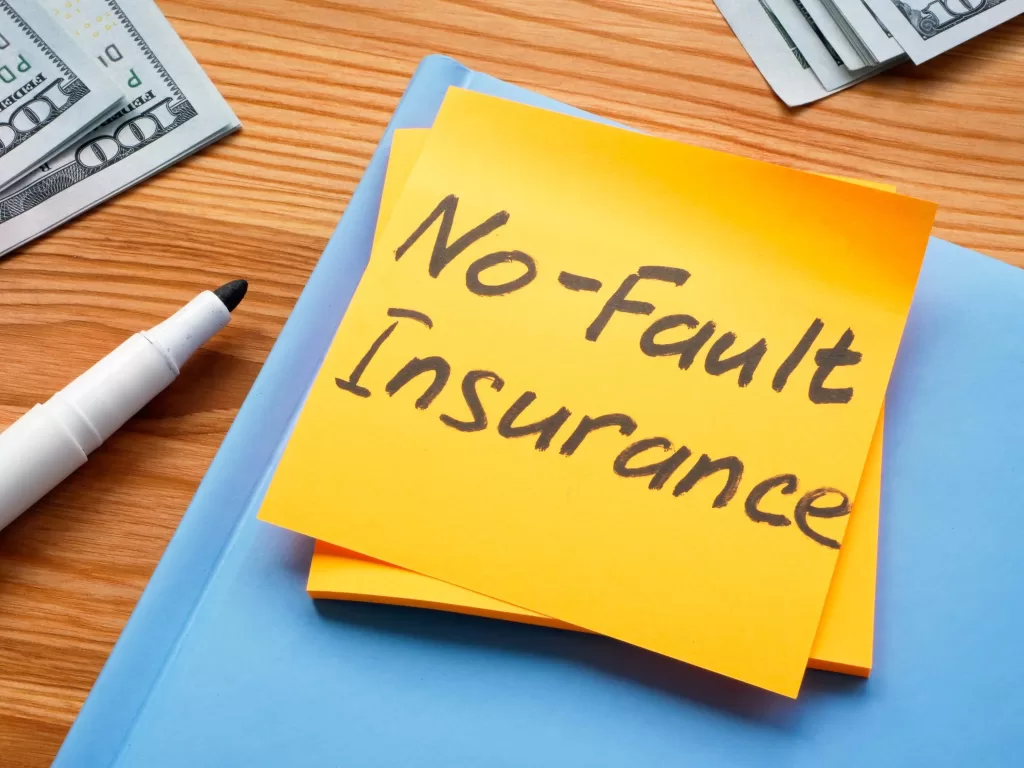
Personal injury protection (PIP) is also known as no-fault insurance. With no fault benefits, personal injury protection allows for quick resolution to insurance claims as it pays promptly, no matter who is at fault. 

Personal injury protection is designed to compensate you for economic losses such as medical expenses, including rehabilitation expenses, lost wages, and other out-of-pocket expenses related to injuries sustained for up to $50,000 per person. This basic no-fault coverage is for the driver and all passengers injured in the vehicle. It can also cover injured pedestrians if you have a pedestrian accident in your vehicle. Personal injury protection or no fault insurance is designed to help you get back to good health as quickly as possible, which is why it provides no-fault benefits. 

However, if you suffer a serious injury, then you may need to file a car accident lawsuit to recover the losses for your extensive medical bills, lost wages, and non-economic damages such as pain and suffering. 

Uninsured Motorist Coverage

In New York, auto insurance coverage is mandatory, though some drivers break the rules by driving uninsured. To protect yourself, the state of New York requires you to have a minimum limit of $25,000 per person and $50,000 per accident of uninsured motorist coverage (UM). 

If you are in a car crash and are hurt but the driver flees or is driving an uninsured vehicle, uninsured motorist coverage will cover your injuries. It is important to note that this coverage is only for when an uninsured vehicle or a hit-and-run driver causes you bodily injury and does not cover property damage. 

Supplemental Spousal Liability Insurance

While it is not mandatory, supplemental spousal liability is now required to be applied to all liability insurance coverage policies that are opened after August 1, 2023. You do not need to keep it, and if you do not have a spouse, you would not need to; however, you must request to decline or remove it from your policy by contacting your insurance company.

Potential Risks for Having Only the Minimum Coverage

One of the biggest issues with having just the minimum insurance is that you leave yourself vulnerable. You may be insuring multiple vehicles and looking for a way to keep costs down. You may even think insurance agents are trying to get you to pay more for your auto insurance coverage beyond what New York requires.

However, the additional costs of increasing your liability coverage in your auto insurance policy to higher limits are small compared to the benefits. For example, if someone tries to sue you for the injuries sustained in a car accident and they are awarded compensation that goes beyond what your auto insurance provides, you would be responsible for that amount. 

How much coverage you need will depend on your unique circumstances. Instead of choosing the cheapest auto insurance that meets the state’s requirements and risk being saddled with a financial burden due to your medical expenses, you should discuss your auto insurance with insurance professionals to find the right coverage for your needs. 

Worker Accident Insurance Disability Compensation And Social Benefits

Understanding New York Law and How It Relates to Car Accidents

New York is a no-fault state, which requires drivers to be covered by their own auto insurance in an accident. This is the key difference between a no-fault state and an at-fault state, though the terms can become confusing, especially when trying to understand auto insurance coverage.

No-fault insurance does not mean you are not at fault. It simply means that if you were in an accident caused by you or someone else, your PIP coverage covers the damages. However, if you reach the threshold for serious injury, you are permitted to file a lawsuit. Depending on the circumstances, you will want to hire car accident lawyers or Uber accident lawyers to represent you throughout the legal process. 

An attorney can help you determine if you meet the threshold but the situation must be that you suffer an injury that is deemed serious and you have experienced an economic loss of more than $50,000. Serious injuries are defined as fractures, dismemberments, loss of a fetus, permanent loss of use of a body part or system, any injury that hinders your ability to live normally for a minimum of 90 days, and death. 

Additional Coverage Options to Consider for Greater Car Insurance Protection in New York

In New York, you can purchase expanded coverage for the required types of insurance for a more robust policy, such as adding more to your underinsured motorist coverage. It is highly recommended that you do so and consider other types of coverage that are purely optional.

Here is a look at additional optional insurance coverage that you may want to consider in New York state:

Comprehensive Coverage

Comprehensive coverage is a smart option for anyone living in New York. Under comprehensive coverage, any damage caused to your car for any reason other than a collision will be covered. This includes theft, fire, weather events, vandalism, falling objects, or damage caused by an animal. Comprehensive coverage pays for your transportation expenses for a specified amount of time until your vehicle is replaced. 

Medical Payments Coverage

Medical costs are extremely expensive, and if you want additional reassurance that you will not be stuck with a mountain of bills for your medical treatment, adding medical payments coverage can help. It pays for your medical needs resulting from the accident, for your passengers, and for any funeral expenses in the event of a death, regardless of fault.

Concept of disability insurance with paper shield protected by hand of insurer

Collision Coverage

Collision coverage is another option in New York where your own insurer will pay you, regardless of any fault you may have, for damage to your vehicle caused by a car accident with another vehicle or another object. Without this coverage, you may still recover some or all of the damages by filing a claim with the other party’s insurer, though having this coverage provides greater protection and peace of mind. 

Rental Reimbursement

Rental reimbursement is another additional coverage you may want to consider adding to your insurance in New York. As the name suggests, it covers the cost for a rental car after an accident. 

In New York state, adding this other coverage to your insurance is not required and will not affect your driver’s license, driving record, license plates, or vehicle registration. However, it can make your insurance provide greater protection and reduce your risks in an accident, whether you are at fault or not. 

The Role of an Attorney in Resolving Disputes and Claims with Car Insurance in New York

While you are required to have specific minimum coverage in place for your insurance in New York state, it does not always mean that your insurer will be there for you. Even if you have never been late making your payments, you may find that when you reach out to your insurer after a crash, they may refuse to cooperate with you.

Settlement negotiations with your insurer may be just as much of a challenge as those involving the insurance company representing the driver of the other car. With the way insurance is run in New York, you may need to discuss your accident with an attorney who can help you through the quagmire of confusion that tends to arise in such legal matters.

You will want to talk to a lawyer if you have extensive injuries as you might meet the threshold for what is required to file a lawsuit in the state. Additionally, if you are being blamed for causing the accident, it is in your best interests to obtain legal representation to avoid having your compensation reduced.

Some insurers will offer a low settlement or even deny paying an insurance claim without valid reason. They often employ tactics such as delaying payments to make victims more desperate to accept any amount they offer. 

The role of an attorney in these scenarios may very well be instrumental in the outcome. While no lawyer can ever guarantee what will happen, they can take certain steps to support you throughout your case.

Investigating and Gathering Evidence

Your attorney will start an investigation and gather evidence you may have been unable to get at the accident scene. This evidence may include traffic camera footage, surveillance footage, and witness statements.

Negotiating for a Fair Settlement

Based on the investigations and evidence as well as the laws in the state, your lawyer will negotiate for a fair settlement amount. 

Abide by Time Limits

When you file a lawsuit, you only have a limited amount of time to do so. This is known as the statute of limitations, and for car accidents, you have three years from the date of the crash in New York. Your attorney will know about all deadlines and make sure all the relevant paperwork is filed on time.

Represent You in Court

Most of these cases will settle through negotiations, but if yours does not, your attorney will be ready to go to trial and fight for your compensation. If you are struggling to get the money you deserve after your car accident, contact Mazzu Law to schedule a free initial consultation.

Is It Legal to Run a Yellow Light in New York?

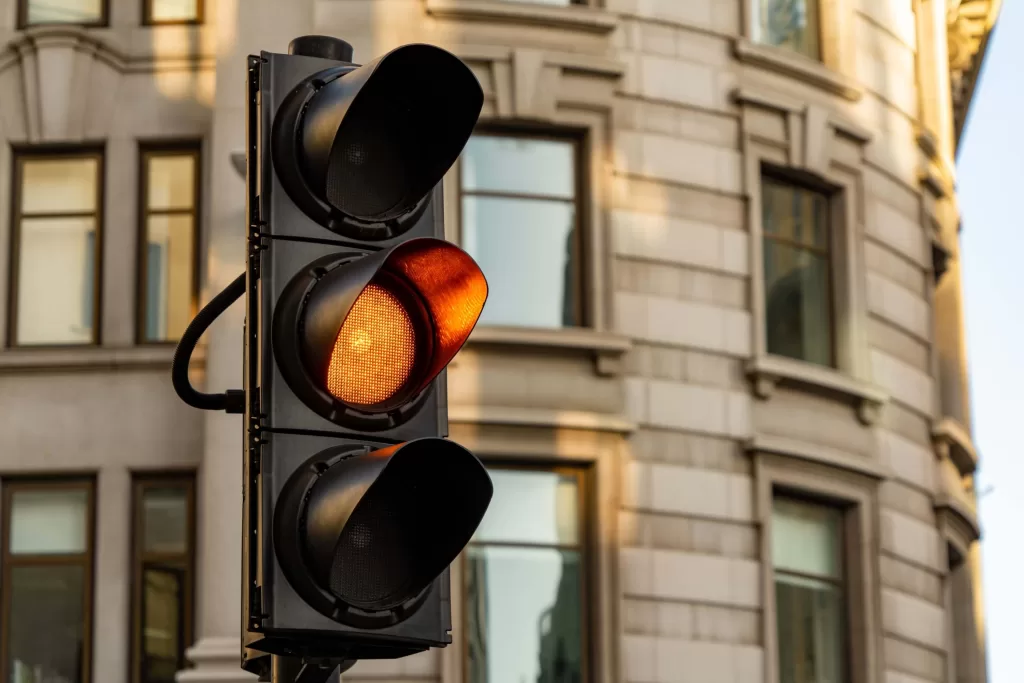
A traffic light on Amber

Are you wondering if there are any legal consequences for running a yellow light in NY? Every driver should know New York traffic light laws and the potential penalties for yellow light running in NY. Every traffic control signal is to keep drivers, pedestrians, and cyclists safe on the roads.

When a light turns yellow, it is a warning to slow down and prepare to stop. If the light turns red, you know you could get a traffic ticket for running it. You could also wind up in a car accident with serious injuries and may even be held accountable for causing injuries to another driver. 

Mazzu Law is committed to seeking justice with empathetic legal representation for accident victims in Buffalo, New York. If you were hurt in an accident at an intersection, a personal injury lawyer from our legal team can help advocate for your legal rights. In this informative blog post, we answer the question, “Is it legal to run a yellow light in New York,” and cover everything you need to know. 

Legality of Running a Steady Circular Yellow Signal

Traveling through an intersection during a yellow light is completely legal in New York. The Department of Motor Vehicles and New York law clarify this in Section 1111 of Article 24, stating that a  yellow light on a traffic control signal does not mean “stop.”

What you should do when you see a yellow light is prepare to stop. You can enter the intersection, though you should do so cautiously if it is too late to apply your brakes. It adds a buffer since the yellow light is to alert you that all related green movement will end shortly with the red indication. 

Essentially, New York law traffic rules require you to make a choice. Either go through the yellow light or come to a halt. Understanding what happens when you encounter a red light in New York helps bring this matter full circle. 

What Happens If the Light Turns Red While You are in the Intersection?

Under New York law, it is perfectly legal to drive through an intersection with a yellow light. However, when the light turns red, the law is very clear. 

If the traffic light turns from a green light to a yellow light and you are still traveling through the intersection, you can breathe a sigh of relief. You must already be in the intersection when the light turns red, and you are allowed to cross through it to get out of the way of oncoming vehicles. 

When you enter that intersection after the light has turned red, it is considered a traffic violation. If a police officer sees you run the red light, you will get a ticket. It is deemed negligent behavior to run a red light, and should your running of the red lead to a car accident, you may wind up being blamed for it. 

How to Know If You Ran a Red Light

Was there a yellow light or a red light at the traffic signal? Perhaps you are questioning yourself after moving through the traffic light and hoping you are not in any trouble. You may have gotten to the other side of the intersection without crashing into another vehicle but you may be wondering if there will be any legal implications ahead. 

In New York, it is legal to run a yellow light but it is illegal to run a red light, just as it is in every state. Here is how to know if you have broken the law:

City crossing with a semaphore on blurred background with cars in the evening streets

You Have Passed the Crosswalk Lines

The intersection starts at the crosswalk line, so if you pass this area during a yellow light, you are fine. However, if the traffic light has turned red already and you enter the intersection, you could receive a ticket. 

There is generally a stop line at the entry of every intersection and an area for a crosswalk. Sometimes, these stop lines fade after years of wear and tear, making it unclear as to where the pavement marking is located. In other cases, there may be multiple lines, which can be confusing when trying to determine where the intersection actually begins. This can add yet another layer of difficulty when pursuing a personal injury case against a driver who runs a red light in New York. Your attorney should be able to pull relevant evidence, such as traffic control camera footage, to help prove what happened.

Red Light Camera Tickets

Automatic red light cameras on or above the traffic signs are set to activate as soon as vehicles enter the intersection on the red light. If you get a ticket from a red light camera in New York, it can be extremely challenging to argue your way out of it without an attorney.

Penalties for Running a Red Light in New York

It is illegal to run a red light in New York. The penalties for failing to come to a full stop in these scenarios will often result in tickets and points added to your driver’s license. Generally, a police officer will issue a ticket for one of the following reasons:

Failing to Obey a Traffic Control Device

If a New York police officer witnesses you running a red light, they will write a ticket for this violation. You may have points added, be required to pay a fine, and in some cases, be issued jail time. 

It should be noted that a ticket for running a red light that is issued by a police officer is different from one sent by mail from traffic cameras. There may be potential for malfunctions with these signals,so if you do get one, the penalties will be lower than if a law enforcement officer issued the ticket.

Running a Red Light

A ticket for running a red light in New York has stricter penalties. In most cases, those running the light are also going above the speed limit. 

Issues with False Accusations of Running a Red Light When You Were Running a Yellow Light

It is also possible to be issued a ticket by a police officer for running a red light instead of a yellow light. The officer may have been at a different perspective at this intersection and it could have looked as though you had not cleared that line before the light changed. 

When you have a situation in which you want to dispute the right of way at traffic signals, it is always best to remain polite and obtain legal representation. You will gain nothing by arguing with an officer of the law.

An angry neighbor shouting, blaming

It may be worth fighting as there are certain situations where a citation could cost you even more than the fines, jail time, and other punishments. For example, you may have entered the intersection on a yellow light and another driver may have negligently come from the other direction. The officer may issue you a ticket, and the other driver may try to use that as a point to get out of being held liable for your injuries. In moments like these, the reality is that you need a personal injury lawyer to help you gather the evidence needed to present your case in a court of law. 

How Running a Yellow Light Could Result in an Accident

Running a yellow light could cause car accidents and Uber accidents even though it is legal. That is because running yellow lights can cause collisions because drivers tend to speed up at a yellow light to make it through the intersection before the light turns red. When this happens, T-bone accidents, rear-end collisions, and left-turn accidents are the common results. 

Sometimes, a driver may slow down to turn into a gas station at the last minute, and a person behind them trying to run the yellow may smash into them. It is a classic case of speeding to make the yellow light; all drivers need to know the consequences, which includes a greater chance of a car accident. 

Drivers often misgauge the time and distance they have before a light changes to red. When this happens, they wind up driving into oncoming traffic.

Another scenario has to do with short yellow light timing. Yellow lights that are set too short by the city allow for less time to make it through the intersection safely. Drivers may make a sudden stop, or worse, run the red light and put themselves and others in danger. 

If you have recently been in an accident in New York and the color of the light is a point of contention, make sure that you consult an attorney. Whether you were issued a ticket or not, a personal injury lawyer will investigate, gather evidence, negotiate, and advocate for your rights. Contact Mazzu Law to discuss your New York yellow light accident.

Can You Have Car Insurance in a Different State Than Your Registration?

If you have just moved to New York and you have your own vehicle, you should make sure to get your car insurance squared away with the insurance company. You will need to update your insurance coverage as out-of-state car insurance rules differ from those in New York.

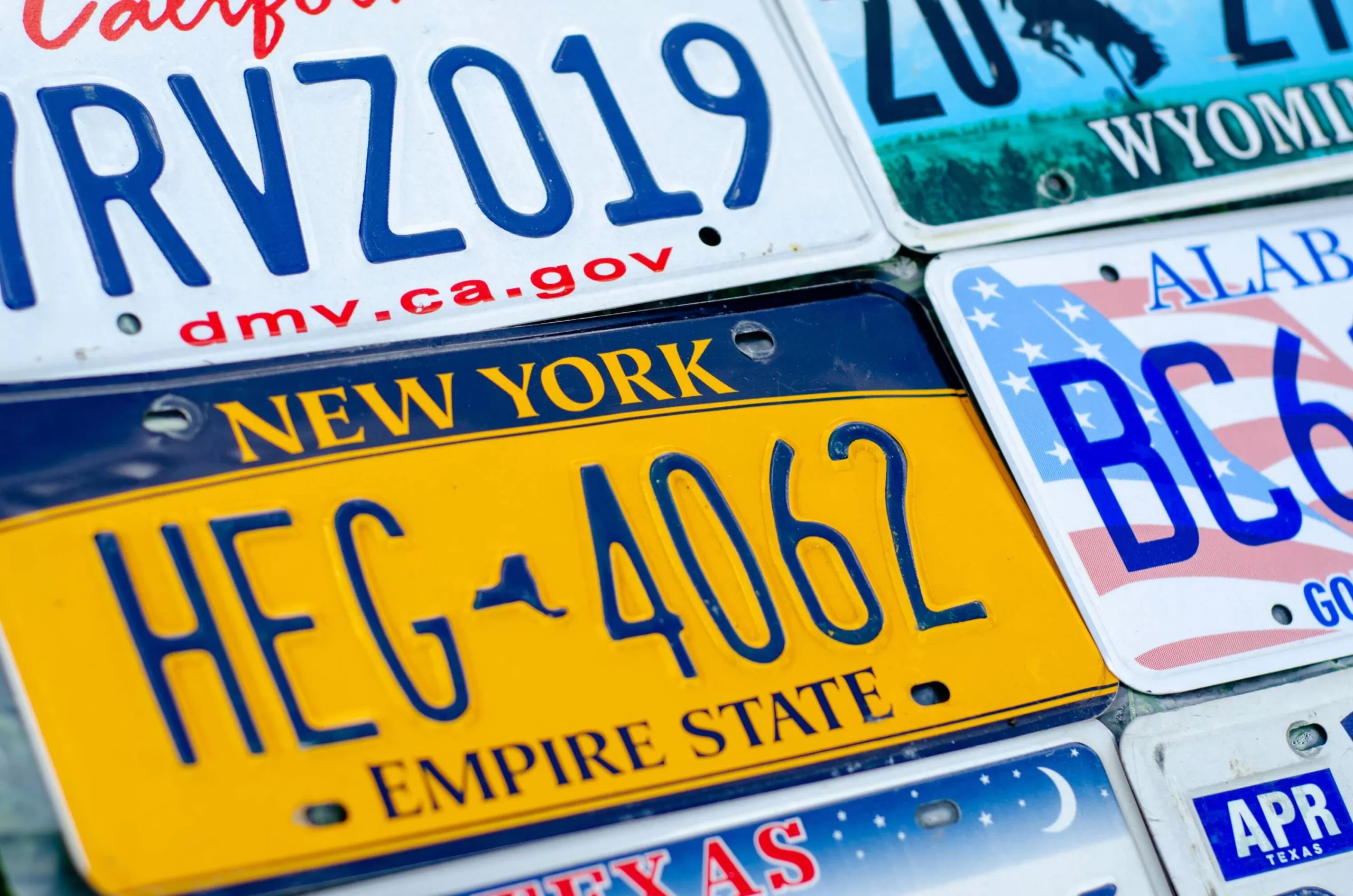
Vehicle registration plate of the united states of america.

Car insurance with a different state registration is ill-advised since your car insurance policy may not cover you in the event of car accidents or Uber accidents. When you do not get New York state insurance coverage, it is considered a form of insurance fraud, which can result in criminal charges. 

If your car registration is not in the same state as your vehicle insurance or driver’s license, it is important to get it up to date. Mazzu Law is a personal injury law firm committed to helping injured victims get justice and compensation for their injuries. In this blog post, we address the question, “Can you have car insurance in a different state than your registration?” to keep you informed and in compliance with New York state law. 

Auto Insurance Requirements Across Different States

When it comes to car insurance, you do not need to worry if you drive into another state temporarily, such as for a vacation or even a brief work trip. However, the situation gets more complicated if you spend a lot of time in a different state.

Your driver’s license, car insurance policy, and vehicle registration should all be for the same state that you live in for most of the year. If you have recently relocated to New York, you should speak with an insurance agent from your insurance company to update your insurance coverage. Generally, most car insurance companies will allow you between 30 and 90 days to make these changes. 

Additionally, New York State insurance requirements mandate that you must have New York State insurance coverage issued by a company licensed by the New York State Department of Financial Services and certified by the New York State DMV. Out-of-state insurance is not accepted.

Conversely, if you move from New York to a new state, you should contact your insurance provider as soon as possible to prevent issues with your registration and insurance policy, particularly when it comes to liability coverage. This will ensure that you are covered in the event of an accident.

The Legal Implications of Having Car Insurance in a Different State Than Your Vehicle Registration

Can you have car insurance in a different state than your registration? No, you cannot. If you have auto insurance in one state but not in a new state, then it is illegal to not have insurance in the same state as the one in which your car is registered. You must have your vehicle registered and insured for the state of your permanent residence or you may face legal consequences.

Insurance Fraud

If vehicle registrations for motor vehicles are not registered and insured for the same state, it is a matter of fraud. Your insurance company can cancel your insurance policy, and if you have any pending insurance claims, they can deny them. Additionally, fraud is a criminal act that could be punishable by fines and jail time. 

Man fills out a car insurance form after a car accident

Driving Without an Insurance Policy

When an insurance company suspects fraud, the insurance provider will cancel the policy, making the insurance card null and void. Driving without insurance can also result in punishments, including driver’s license suspension, jail time, and fines. 

Exceptions That Are Permitted with Auto Insurance in a Different State from Vehicle Registration

Cross-state car insurance policies when you move from one state to a new state are only available in certain scenarios. Here is a look at when your insurance company will likely make an exception for when your vehicle registration and insurance policy are not in the same state.

Multiple State Residency

Sometimes known as the “snowbird exemption,” you may be able to have insurance in your home state and any other states in which you reside. It will vary depending on state regulations, though for many New Yorkers, escaping to warming climates in the winter is a common practice. 

Most states will require that you have your registration and insurance in the one state but there may be requirements from the DMV in your home state. If you have multiple motor vehicles and one is in one state while the other is in a different state, you may need to have the vehicle registration and insurance for each in separate states. You should contact your local DMV and your insurance agent to make sure your vehicles are properly covered in accordance with the laws in the state. 

Temporary Relocation

If you are staying in a different state from your primary residence but only for a short term for work or other reasons, you may not need to update your insurance policy. While you will not need to change your car registration to a temporary status, you may want to buy insurance for an additional policy to have sufficient coverage while you are away.

College Students

If you attend school in a different state, you will likely need to register and insure your vehicle for the state in which you are attending college. If a family member obtained your car registration, you will need to have them get it registered and insured for the state in which you will attend college, or have them transfer ownership. 

College students who have a car registered in New York but are leaving it behind during the semester can reduce their insurance costs. Ask about applying for an “away at school” discount to your insurance premiums for a more affordable insurance policy. 

Military Members

Active members of the military also get exemptions with insurers. If you are a member of the military, you must keep your insurance policy and register your vehicle and your driver’s license in your home state. Even if you live elsewhere, this should apply as the general rule unless there has been a permanent change of station (PCS). It is always best to check with insurers as well as your military branch to ensure proper protocol. 

Success ladders and goal achievement concept

Steps to Take for Legal Compliance with State Laws for Car Insurance

Making sure your vehicle is properly registered and that you at least have the minimum coverage requirements for insurance is essential. If you were to get into a car accident, your coverage may be voided and you would; be stuck paying for all your expenses out of your pocket. This can be especially upsetting if another person caused the accident.

Before you ever need to make an insurance claim, make sure your insured vehicle meets the requirements set by the laws in the state. To avoid issues in the claims process for bodily injury or property damage, follow these steps:

Check the Requirements

Most people can agree that moving to another state is a huge pain, especially when it comes to insurers and coverage. Before you make your move, you can avoid many hassles by checking with your insurance and the DMV about registering your vehicle. 

Update Your Vehicle Policy Before Time Runs Out

Each insurance company will have its requirements for when you need to update the policy coverage after you move, even if you do not change states. However, when you change states, you must not delay as it can land you in legal trouble with fraud charges.

Generally, insurers will allow 30 to 90 days. You can stay ahead of this by contacting your insurer as soon as you know you will be moving. You do not want to risk getting into a car accident after your move and discover that you are not covered. Both the Driver License Compact (DLC) and the Nonresident Violator Compact (NVC) will see to it that your home state is alerted of this violation. You may have your license suspended until you take care of this issue, and with a ticket on your driving record, you can expect your coverage to become more expensive. 

Learn If You Need to Insure in Each State You Reside

If you insure your car in a state t where it is not primarily driven or where your main residence is located, it may be considered fraud. You may need to live and drive in two separate states and this would require you to have a discussion with an insurance editor who can help you apply these changes.

Change Your Insurance

Remember, in New York, you have to use a provider that offers coverage in the state. You may have an insurer who provides nationwide coverage, which would allow you to stay with them. However, even if you do not need to change companies, you will need to consider the changes to your premium. It may become too expensive for you to stick with the same company.

Since you may need to shop around, it is always a wise move to start this process before you move. You will not be in a crunch to get the coverage you need and you can have full peace of mind that you are covered should an accident occur.

What to Do If You Get into a Car Accident with a Vehicle Registered Elsewhere

Most states require proof of vehicle insurance and registration, and you may be worried about that after a car accident. As the vehicle registrant, you will need to provide proof of your coverage to responding officers. Even if you did not cause the accident, it is required.

Elegant middle age business woman calling someone while towing service helping her on the road

Call 911

Your first step should be to call 911 to report the crash and remain at the scene. When officers arrive, they will assess the situation. If you or the other driver are in violation of the requirements, you may receive a citation, hence why you are urged to make sure you are covered when you move.

Get Medical Care

Since your health and well-being are of utmost importance, it is vital that you seek immediate medical care after a crash. You may feel fine, though the adrenaline surge you experience after this accident may inhibit the symptoms of your injuries. Call a family member if necessary and go to the emergency room or nearest urgent care center to get the care you need.

Gather Evidence

If you are capable of taking photos and videos of the accident aftermath, use your phone to capture these images. Witnesses may also be able to record statements and tell you what they saw.

Contact a Car Accident Attorney

Ideally, you have insured your car in accordance with state rules. If there are any issues with the insurance of your vehicle or the driver of the other car has caused you serious injuries, you should not hesitate to speak with a personal injury lawyer. 

New York is a no-fault state, which requires drivers to go through their own insurer regardless of who was at fault for the accident. If you do not have a policy, you may be stuck in a difficult situation. However, when another driver behaves negligently and causes you severe injuries that may have permanent impacts on your life, personal injury law allows you legal recourse to recover compensation for your financial losses.

It can be incredibly complex to do this in many states, including New York. You should not proceed without having a lawyer guide you through this intricate process. 

Additionally, since New York follows a pure comparative negligence model, you may be partially blamed for your injuries. If there are issues with your insurance, this may further complicate things, leading to a lowball settlement offer from the other party’s insurer. In some cases, they may even try to deny your claim on baseless grounds. Protect yourself by contacting Mazzu Law and scheduling a free consultation. 

Work Hour Restrictions for Truck Drivers in New York

Since truck drivers spend many hours on the road, federal law and New York truck driving laws require them to obey hours of service regulations to prevent fatigue and truck accidents. Truck driver regulations in NY must be followed as part of safe operations. 

Failing to abide by these rules could subject truckers and trucking companies to being held liable in a personal injury lawsuit for causing truck accidents. Mazzu Law is a personal injury law firm committed to helping victims in New York accidents involving truck drivers who were driving in violation of the service hours.

In this blog post, we discuss the laws set by the federal government and New York State, the dangers of driving fatigued for truckers, and the consequences of these impacts.

Happy professional truck driver driving his truck and looking at camera

The Dangers of a Fatigued Truck Driver

Work hour restrictions for truck drivers are in place to keep driver fatigue from setting in and prevent truck accidents. Fatigued driving is much more likely to cause a tractor-trailer or semi to crash. Here is why:

Impaired Judgment

An overtired driver of any type of vehicle is more likely to cause accidents because their ability to make sound decisions is compromised. They are less capable of obeying the speed, stepping on the gas to make it through to their destination, and they make other reckless decisions that put everyone’s safety in jeopardy. 

Frequent Errors

A truck driver who has not had enough sleep will make more errors than one who is well-rested. They may miss their turn, drift between lanes, or fail to observe traffic signals.

Dozing Off

Driver fatigue may also cause a truck driver to fall asleep behind the wheel. This is dangerous for the driver of any type of vehicle, though when it is a large truck that weighs up to 80,000 pounds or is carrying hazardous materials, the results can be catastrophic.

Delayed Reaction Time

Driving while fatigued has been likened to driving while drunk. When a truck driver is drowsy, they are not as capable of reacting quickly to changes on the road ahead, which can be deadly.

What Are the Hours of Service Regulations a Truck Driver Must Obey?

HOS rules for NY truckers are identical to the hours of service set by the Federal Motor Carrier Safety Administration (FMCSA). These rules apply to qualified drivers of all-sized trucks with a gross vehicle weight rating or gross combination weight rating for the tractor-trailer combined of over 10,000 lbs.

Young woman professional truck driver in a big truck

The work hour restrictions a truck driver must follow in New York as well as nationwide include:

  • Driving time during hours of service is set at a maximum of 11 hours per day, however, that maximum of driving hours is only permitted after 10 consecutive hours off duty.
  • No truck driver is permitted to drive more than 14 hours after going on duty following 10 consecutive hours off duty.
  • Weekly limits are imposed for truck drivers in New York and nationwide. They cannot drive more than 60 hours over seven consecutive days or 70 hours on duty over eight consecutive days.
  • Breaks of 34 hours or more are required to reset those seven or eight-day limits.
  • Drivers using the sleeper berth must spend eight consecutive hours at minimum in this compartment, plus two consecutive hours in the sleeper berth, off duty, or a combination of these two.
  • Any driver who operates within 150 miles of their home base and returns there at the end of their shift is permitted a short-haul exception and may work a 14-hour shift.
  • Drivers must also use electronic logging devices to track their driving time.

Compliance with these rules is required for drivers and the trucking companies that hire them. Anyone who operates in such a way that violates these regulations will likely face serious consequences. 

Legal Implications for Violating Work Hour Restrictions for Truck Drivers in New York

When a driver violates the rules and it causes an accident that leads to other people being injured, there will be legal consequences ahead for the driver, the trucking company, and any other parties that are determined to be liable for their role in this crash.

Penalties from the FMCSA

For a lack of compliance with the HOS rules and regulations, the FMCSA will impose hefty fines. These fines are typically thousands of dollars, which can be devastating for a smaller company or owner-operator.

Impact on Employment

Compliance with the regulations is expected and is a contingency for employment. When a driver breaks these requirements and it causes a truck accident, they may struggle to find a job with another company. 

Even worse, serious violations that cause accidents may mean that a driver loses their CDL license. They would be forbidden from operating a commercial vehicle again.

Criminal Charges and Civil Liability

When truck accidents leave victims severely injured or cause fatalities, the driver may face criminal charges imposed by the state of New York. Additionally, they could be sued for medical bills, lost wages, pain and suffering, and other losses. A driver who violates the hours of service is considered negligent. 

What to Do If You Are Injured in a Truck Accident

Any driver who is found driving beyond the hours they are allowed to be on duty is a safety hazard to everyone on the road. As more and more trucks fill the roads of New York and the nation to meet consumer demand, every driver is urged to take the proper precautions.

This includes paying attention to every commercial vehicle and knowing where the blind spots are to avoid lurking in a potentially dangerous area. While many of these hard-working people follow the laws and work tirelessly to prevent a wreck, others disregard the rules.

If you are hurt in a New York truck wreck, here are the steps you should take:

Call 911

Stressed driver talking on cellphone on roadside near her smashed vehicle calling for emergency service help after car accident.

Do not hesitate to call 911 immediately when you have been in a motor vehicle accident involving a truck. These massive vehicles can cause serious damage, especially if they are transporting hazardous materials.

Get to a Place of Safety

Your safety is paramount, and you may be in grave danger if you stay in your vehicle. If you can get out, you should. The operator on the 911 call should be providing you with detailed instructions on what to do next.

Seek Immediate Medical Attention

In most cases, it will be obvious that you are hurt. However, do not assume that you are free of injury if you are not bleeding. Many serious conditions can arise from a high-impact collision like this, and they may not produce symptoms for hours or even days. It is vital that you complete a full medical evaluation to determine the extent of your injuries.

Gather Evidence

The documentation you present to the insurance agency for your accident is important for showing who is at fault and recovering the full amount of compensation you deserve. If you can, take photos and videos, and obtain contact information from the driver as well as any witnesses.

Contact a Truck Accident Lawyer

The hours a driver is permitted to be on the road while operating a commercial vehicle must be followed. Along with other rules, if someone breaks them and it leads to your auto wreck, you have the right to hold them accountable under personal injury law.

Since the rules are complicated on the federal level and you will have state laws that were violated too, it is wise to discuss what happened with an attorney. Choose one who is familiar with trucking as they will know the applicable laws. 

Additionally, accidents involving trucks have far greater complexities to them. They often involve more than one liable party. While the driver may have behaved negligently, the company that employs them may have given them an ultimatum to break these rules and stay on the road. They may have manipulated the data in the logging device or even broken other laws.

When you hire a Buffalo personal injury lawyer to represent your case, you will have someone to stand up for your legal rights and get you what is fair. These large truck entities have different insurance policies that are larger and will do anything to protect them, which is why they have teams of litigators already on board.

The attorneys at Mazzu Law are here for victims in their time of need. Contact us today to schedule a free consultation and learn more about how you can hold the responsible parties liable for not following proper procedure when it comes to hours on the road or other rules.

New York’s No Fault Law

Driver check for damage after a car accident before taking pictures and sending insurance

New York no-fault insurance was designed to minimize legal issues in a highly populated area with many cars on the road. Auto insurance regulations in NY sought to simplify the process with New York car accident law, however, no-fault insurance often leads to even greater confusion for accident victims.

Not all drivers realize that no-fault insurance means they must go through their own insurance company. Even fewer drivers know that no-fault insurance policies allow you to seek compensation from an at-fault driver in certain circumstances. 

Auto accidents in New York may leave victims with injuries and countless questions on what to do for a no-fault claim. Mazzu Law is a law firm that provides comprehensive Buffalo personal injury services for injured victims. In this blog post, we explain New York no-fault insurance and help you understand your options after a car accident.

Understanding New York Law and No-Fault Insurance

No-fault insurance is a type of insurance coverage that attempts to minimize the finger-pointing and blaming that tends to happen after auto accidents. Many drivers are confused about the meaning of no-fault coverage as they mistake it for meaning that they are not at fault.

Put simply, no-fault coverage means that each driver will go through their own insurance company to recover compensation for medical expenses, lost wages, and other losses.

After a car accident, you will start the claims process with your own insurance company because you have no-fault insurance. However, New York law also uses a pure comparative negligence rule, and this could cause you to be partially blamed for your own serious injury.

When you are blamed in a no-fault state, it reduces the amount of compensation you can receive. Since your medical bills and lost wages are likely already piling up, it is in your best interest to speak with an experienced car accident lawyer to find out more about your legal options.

Minimum Coverage Required by the Insurance Company

Like any other state, New York has specifications for the legal minimum requirement of satisfying your insurance coverage. Here is a look at what all New York drivers must have in place before getting behind the wheel:

Personal Injury Protection (PIP)

Personal injury protection, also known as PIP or no-fault insurance cover, is the type of no-fault insurance you are expected to carry as a driver in this state. 

This no-fault insurance will cover you in an accident, no matter who was at fault, and provide compensation for medical expenses, lost wages, and other expenses related to your injuries. It covers you and your passengers with one exception – you cannot file a no-fault insurance claim if you were driving drunk.

With New York no-fault insurance coverage, you will be covered for accident-related medical bills and rehabilitative costs. Additionally, 80% of lost earnings will also be covered with payments of up to $2,000 per month for up to three years after your motor vehicle accident.

When you make a no-fault claim for your car accident through your own insurance company, you may also receive up to $25 a day for up to a year for your accident-related expenses. No fault benefits additionally include a limit of $50,000 per person for injuries sustained and $2,000 for death benefit if someone in your vehicle dies as a result of serious injury in this car accident.  

A Sticker with memo No fault insurance and notepad.

Liability Coverage

Liability insurance is also required in New York if the other driver attempts to file a third-party claim. Keep in mind that for this personal injury coverage to be filed for a third-party claim, the other driver’s car accident injuries must be considered a serious injury, extensive personal property damages have occurred, or it has resulted in the death of one of their loved ones. 

The minimum coverage you must have in place is $25,000 per person and $50,000 per car accident for bodily injury along with property damage liability of $10,000. Wrongful death liability must be covered with at least $50,000 per person and $100,000 per accident.

What Is the Difference Between a Fault and No-Fault Insurance State?

In a no-fault state such as New York, it is important to understand the difference between states that follow an at-fault model. How does no-fault insurance work? It is quite simple, as it allows both parties to recover reimbursement for their personal injury claims. 

In at-fault states, the insurance company will typically determine who caused the accident. The driver responsible will be held liable for paying the damages. This is typically covered by their insurer, though the driver may wind up as a defendant in a personal injury lawsuit if their coverage is too low to pay for lost wages, medical appointments, auto body repair, prescription drugs, and other losses.

It is also important to note that whether you are in a no-fault state like New York or one of the other states that follow an at-fault model, a hit-and-run accident will require you to use your own insurance. No-fault benefits will cover you up to the maximum of your coverage, though if you are hit by an uninsured or underinsured driver or the at-fault party flees the accident scene, you may need to dip into your standard health insurance to get the medical treatment you need. 

How Do I File a No-Fault Insurance Claim in New York?

To use your no-fault benefits in New York, you must follow proper procedures for filing personal injury claims so that the insurance company pays you accordingly. You may be denied receiving no-fault benefits if you make any errors in this process, which is why you should consult a personal injury lawyer to protect your legal rights.

This process requires that you submit the no-fault application and file it within 30 days of your accident. It is also necessary to notify the New York State Motor Vehicle Accident Indemnification Corporation. There are very few circumstances where you would be granted an extension on the time limit, making it imperative for victims to quickly file the necessary paperwork. 

You can consult with a car accident lawyer if you were in the hospital and missed deadlines as it may be considered reasonable justification. Ultimately, it is best to take the steps required as soon as possible to avoid complications.

Diverse crowds of people walking through a busy intersection on 5th Avenue and 23rd Street in New York

Can You File a Personal Injury Lawsuit in a No-Fault State?

The whole reason no-fault insurance was established was to protect drivers from lawsuits after a car accident. Still, if the driver that caused the accident was in an uninsured vehicle, caused you to incur bills from your medical providers that exceeded the PIP coverage in your insurance policy, or left you with catastrophic injuries, you can seek compensation through a lawsuit.

New York defines the types of serious injuries needed to move from the no-fault to a fault-based system as dismemberment, major disfigurement, loss of a fetus, permanent loss of function such as neurological disorders or blindness, permanent loss of a body part, impairment that makes it impossible for you to perform daily tasks for at least 90 to 180 days following the accident, or death. 

You should fully understand what this entails, which is why it is best to speak with a lawyer first. Taking this step will mean that you will no longer deal with an insurance agent regarding this situation.

What Should I Do After My Accident?

Everything may seem confusing right after you have been in an accident, which is why you should know what you need to do. 

Call the Police

Reporting your accident allows you to get the help you need from law enforcement as well as first responders. It also helps protect your legal rights since a police report will be filed, and if the other driver was issued a citation for their driving, it could help you as a form of evidence.

Get Medical Care

Many drivers are so shaken up after a crash that they do not fully realize they are hurt. If you are not bleeding, you may mistakenly assume that you are fine. It is best to get treated immediately to catch any hidden injuries and create medical records that document your treatments. It will help tremendously when making lost wage claims and can also be linked to your non-economic damages, helping you to get the full worth of your claim.

Gather Evidence

You should try to take photos and videos only if you are physically capable of this task after your accident. Talking to witnesses and getting their contact information can also be helpful. However, your first priority must be taking care of yourself. If you can not get the evidence on the scene, the next step is the most important one you should take to protect your legal rights after an auto accident.

Hire a Lawyer Who Represents Car Accident Victims

Most people do not know the state laws and their rights. Insurers know this and take advantage, allowing them to give you less for your economic and non-economic damages. When you hire an attorney, you have an advocate who can step in and make sure you are being compensated fairly for your injuries and other losses.
You should be focused on getting better and following your doctor’s orders for your recovery. You will find that to be much easier to do when you have someone looking out for your best interests. Contact Mazzu Law, PLLC to get a lawyer on your side.

What Is the Average Settlement for a Personal Injury in New York?

When you suffer severe injuries in a car accident or other type of accident in New York, you can file a personal injury lawsuit to recover your financial losses caused by the negligent party. In car accident claims, many victims wonder what the personal injury claim average in New York is and what they can expect to receive.

Unfortunately, it is not easy to determine the average personal injury settlement in New York since many factors can impact that amount. You may hope to recover a million dollars, though the amount you receive will depend on your injuries and losses which, in some cases, may only amount to a few thousand dollars.

Professional male lawyer financial advisor consulting happy family couple clients in modern office

Mazzu Law is a New York personal injury law firm committed to helping every accident victim get the fair compensation they deserve. You can learn more about our services as well as read about New York personal injury laws on our blog. In this informative article, we focus on New York car accident claims, the factors that can affect the average car accident settlement, and how New York law may limit the average settlement you receive.

Understanding Personal Injury Settlements in New York

When it comes to personal injury trials, you should know that the injured person is responsible for proving that the other party is liable for their injuries. Most of the time, these cases will not see the inside of a courtroom. Rather, they are resolved through a car accident settlement.

Known as damages, the compensation you receive is broken down into economic and non-economic damages.

Economic Damages

In a car accident lawsuit, economic damages are the tangible losses you have endured as the accident victim. These direct financial losses are easy to prove for your car accident settlement. You will typically receive economic damages for lost wages, medical bills related to your medical treatment for bodily injury, property damage, reduced earning capacity, and future medical expenses.

Non-Economic Damages

Non-economic damages are trickier to quantify as they are intangible. It is difficult to prove these types of damages without a New York car accident attorney helping you fight for them. With intangible losses, you may be able to recover pain and suffering damages, emotional distress, loss of enjoyment of life, disfigurement, and permanent disability. 

The insurance company will likely use a multiplier formula as they often do for New York car accident settlements. They will assess the multiplier based on the injury severity and multiply it by the economic damages to determine the full amount for the settlement. 

This is why there is no specific average settlement. The key factors used to determine an average car accident settlement will vary widely between cases, and to ensure fairness, those with car accident claims should speak with a New York personal injury attorney. 

Punitive Damages

As a car accident victim, you may have heard about punitive damages and wonder if they will apply in your case. New York’s legal system rarely applies punitive damages, but in a serious car crash, it may occur. 

Punitive damages are reserved as a way of punishing the at-fault driver or defendant for their excessively reckless or intentional acts. it is not likely that someone with minor injuries would see this awarded in their case. However, if a T-bone accident or a head-on collision caused by a drunk driver resulted in the wrongful death of a loved one, a New York judge or jury may find it justifiable. 

Factors that Influence the Settlements Amount for a Personal Injury Lawsuit

To determine a car accident settlement, the insurance company will need to examine all the factors that make each case unique. Some injury victims may receive more than others based on the evidence presented and the relation to these factors. 

Team, collaboration and ideas for company

Who Is At Fault?

One thing that comes up in personal injury is fault, and determining it is the key to who should be held liable. In New York, the no-fault insurance law will apply in a car accident, which requires all drivers to go through their own insurance company, even if they are not at fault. 

Even though your own personal injury protection is designed to cover you after a car accident, those who have serious injuries can seek justice under personal injury law. However, with the pure comparative fault rule, there may be a chance that you are partially blamed for your injuries. If this occurs, you can expect that it will reduce the amount of your car accident settlement.

Type and Severity of Injury

Perhaps the most important factor considered for settlements in a car accident, or any personal injury case for that matter, is injury severity and type. More severe injuries will generally result in a higher settlement, especially if the injuries sustained are permanent. 

For example, spinal cord injuries in a car accident are often permanent. If you do not fully recover from them, you may suffer more lost income than anticipated. You may never be able to work in your former capacity again and require a higher settlement to make up for your lost wages.

Additionally, traumatic brain injuries are often serious—though milder forms, like concussions, often see a fairly speedy recovery. In this instance, you may get a lower settlement from the insurance company than someone who has to undergo physical therapy and occupational therapy to relearn basic skills.

These are only a few examples of how the median compensatory damages award could be impacted by the type of injury. In short, someone with a severe neck injury could expect a much higher settlement from the at-fault driver than someone with only minor injuries who will recover quickly.

Medical Expenses

Medical expenses, like lost wages, are part of the damages you can seek after a car accident. A medically determined injury is likely to result in a mountain of medical bills. Depending on the cost of medical treatment, you may have a higher settlement.

The party who was negligent will need to cover medical expenses for the victim. Medical expenses that may be covered include:

  • Ambulance rides
  • Hospital stays
  • Surgeries
  • Visits to specialists
  • Prescriptions
  • Assistive devices

Extent of Insurance Coverage

New York has a no-fault insurance law that requires you to use your own insurance coverage for bodily injury, even if you were not at fault. When your coverage is exhausted and you have serious injuries, you can use the coverage of the at-fault driver. 

To fully understand the average car accident settlement that you may be able to expect in your case, you should speak with a New York personal injury attorney. 

Supreme Court, New York

New York Personal Injury Laws That May Affect Your Settlement

Under New York law, certain things could affect your settlement:

New York’s No-Fault Insurance System

New York’s no-fault law can factor into your case in a couple of ways. First, this no-fault insurance system requires an injured party to seek financial recovery through their own insurance carrier. No-fault insurance takes care of property damage, injuries, and lost wages. 

However, when you have serious injuries or catastrophic injuries that go beyond the injury threshold, you can seek compensation from the other party. Generally, this would be defined as death, dismemberment, significant disfigurement, loss of a fetus, or permanent loss of function of a body organ or system. Additionally, New York has a pure comparative fault rule that allows you to seek financial recovery, even if you shared fault in the incident. 

As long as you are not solely to blame, you will be able to fight for compensation. It will not be easy though as insurers will look for ways to minimize your settlement. You may have not been wearing your seatbelt or on a phone call at the time of the crash, and insurance adjusters will be ready to pounce on these facts to lower the amount of your claim.

This is why it is wise to have an attorney represent you for your personal injuries in New York. They will know how to stand up to the insurers to get you what is fair. 

Damage Caps

Many states impose damage caps for pain and suffering on certain types of personal injury cases. Most commonly, it is done for medical malpractice. New York is one of the few states that does not have damage caps in place. They are only restricted by the decision of the jury rather than state law.

Wrongful Death

When the negligent actions or inactions of another person or entity cause the untimely death of a loved one, you have the right to file this type of lawsuit. New York specifies that only certain parties may seek damages including the spouse, children, parents, or the personal representative of the decedent’s estate. 

Compensation could take the form of lost wages or financial support your loved one would have provided over the years had their life not been truncated, the expenses for their medical care before their passing, and funeral and burial expenses. Interstate law in New York requires that all compensation in this type of case be distributed to all eligible parties in proportion to their loss.

The Role of Legal Representation in Getting Fair Payouts for Injury Cases in New York

Lost income, medical costs, and property damage may be easy to prove on your own. However, every injured party should consider discussing the particulars of their personal injury with an attorney.

The emotional distress this event has caused you can add even more stress as you try to recover from your injuries. You may also encounter issues with the insurer of the other party who may argue that you are not at the injury threshold to be permitted to seek damages from their policyholder. 

This is why hiring a lawyer right after your accident is recommended. Their role is instrumental and may be extremely pivotal in helping you recover what you deserve.

Lawyer on a phone call in his office

Investigation and Gathering Evidence

Your health and well-being should be your biggest concern when you are badly hurt on the scene of an accident, whether in an auto accident or in some other way. Getting medical care immediately is the first step, and this may mean that you were transported by ambulance to the nearest emergency room without taking photos or videos of the scene.

An attorney can help by launching a deep investigation and gathering evidence that you were unable to get at the time. This may include traffic camera footage or surveillance videos from nearby businesses. They can also track down witnesses and get their statements to help support your claim.

Hiring Expert Witnesses

Expert witnesses can be brought in to recreate the accident scene to show fault. They can also testify about the extent of your injuries or how your injuries will impact your future earnings.

Negotiations

Negotiating can be an exhausting experience when you are trying to recover from painful injuries. Insurers hope you will represent yourself so that they can walk all over you. They will find ways to minimize their payouts and convince you that this is as much as you can get. Lawyers know about all of these tricks and are prepared to fight for you.

What to Do After You Have Been Injured by a Negligent Party in New York

Every person should know what to do after they have been in an accident of any kind. These simple steps can help you stay on the right track and serve to maximize your settlement.

Report the Accident

If you were in an auto accident, you should notify the police. Officers will arrive at the scene to complete an accident report and help move your vehicle out of harm’s way. They may issue a citation to the other driver for violation of traffic laws. 

You will need to fill out a report with management for accidents such as a slip and fall at a store or on someone’s property. Make sure you do not leave without a copy of this report.

Get Medical Care

You may be embarrassed about falling or be angry about the property damage done to your vehicle. However, do not overlook your need for medical attention. Not getting the care you need could cause your condition to worsen into something life-threatening. Medical care following the accident creates medical records that show you were hurt on the date of the accident, making it harder for insurers to claim something else caused your injuries.

Get a Free Consultation with a Lawyer

The laws in the state can make things much more complicated. Along with insurers that are trying to protect their bottom line, you should get the legal protection you need. Insurance companies have their own litigators, and when you hire a lawyer to stand up for you, you will have a better chance of getting the settlement you deserve. Contact Mazzu Law today to have someone fight for justice after your accident.