- Home/
- Buy Clomid Without Prescription in the United States Online
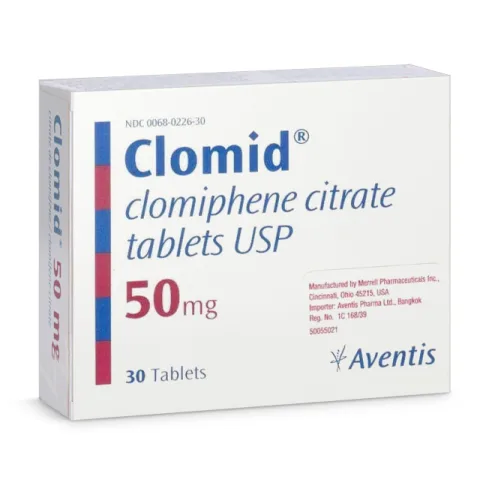
| Product Name | Clomid |
|---|---|
| Core Active Compound | Clomiphene Citrate |
| Main Purpose | Treatment of ovulatory dysfunction in Female Infertility |
| Strength Options | 50 mg, 100 mg tablets |
| How Fast It Acts | Ovulation typically induced within 5–10 days after starting therapy |
| How Long Its Effect Lasts | Ovulation occurs in the current cycle; effect does not persist if not repeated |
| Usual Treatment Schedule | Oral, once daily for 5 days, starting early in the menstrual cycle |
| US Prescription Requirement | Legally requires a prescription in United States |
| Approximate Cost in US Pharmacies | $15–$40 per 5-tablet course |
Clomid: Guidance for Women Facing Infertility in the United States
Clomid, with the active ingredient clomiphene citrate, is a medication prescribed for women struggling with ovulation-related infertility. It is officially approved and regulated in the United States, where it is available by prescription. This guide addresses how Clomid works, who may benefit, and what steps to take if you are considering treatment.
Infertility Is Common — and Clomid Is One Proven Option
Female infertility is more widespread than most people realize — and it is often treatable. According to the Centers for Disease Control and Prevention (CDC), 2019, about 12% of women aged 15–44 in the United States have difficulty getting pregnant or carrying a pregnancy to term. Ovulation problems are a leading cause of female infertility, and medications like Clomid (clomiphene citrate) are among the most frequently used solutions. Knowing this is the first step: you are far from alone, and effective help exists.
How Clomid Addresses Ovulatory Infertility
Clomid works by stimulating the body to release hormones that trigger ovulation. More specifically, clomiphene blocks estrogen receptors in the brain’s hypothalamus. This action “tricks” the body into thinking estrogen levels are low, prompting the pituitary gland to release more follicle-stimulating hormone (FSH) and luteinizing hormone (LH). The practical result: these hormones prompt the ovaries to mature and release an egg.
- For the patient: If you have irregular cycles or do not ovulate, Clomid can help restore ovulation in about 70–80% of women, based on clinical trial data (American Society for Reproductive Medicine, 2017).
- What to expect: Ovulation usually occurs 5–10 days after the last Clomid tablet. Success is often tracked with ovulation predictor kits or ultrasound monitoring.
This mechanism is why Clomid is a first-line treatment for women with polycystic ovary syndrome (PCOS) or unexplained anovulation — the medication directly targets the underlying hormone imbalance, offering a realistic chance at conception.
Is Clomid the Right Choice for You?
| Your Situation | Is Clomid Suitable? | Why or Why Not? |
|---|---|---|
| Irregular or absent ovulation (as diagnosed by a doctor) | Yes | Clomid helps jumpstart ovulation in women who do not ovulate regularly or at all. |
| Polycystic ovary syndrome (PCOS) with infertility | Yes, often first-line | PCOS is a common cause of anovulation, and Clomid is widely used to restore ovulation in these cases. |
| Blocked fallopian tubes or severe male factor infertility | No | Clomid cannot address physical blockages or severe sperm issues; alternative treatments like IVF or surgery may be needed. |
| Ovulation occurs but pregnancy has not happened | Sometimes | If ovulation is normal, Clomid may not increase your chances; evaluation for other causes is advised first. |
| History of hormone-sensitive cancer (e.g. breast cancer) | No | Clomid is contraindicated due to potential hormone stimulation. |
Making the right choice depends on your specific diagnosis and goals. Clomid is not suitable for every cause of infertility. If you are unsure which situation applies to you, a reproductive endocrinologist can clarify your options before you buy Clomid or consider alternatives.
Using Clomid in Real Life: Practical Steps and What Ifs
- When and how to take: Clomid is usually started on day 3, 4, or 5 of your menstrual cycle, once daily for five days. Tablets can be taken with or without food.
- Monitoring: Ovulation is commonly monitored with home kits or ultrasounds. Your doctor may recommend blood tests as well.
- If you miss a dose: Take it as soon as you remember, unless it’s almost time for your next dose. Do not double up. If you miss more than one dose, contact your provider before continuing.
- If no ovulation occurs: A higher dose or additional cycles may be suggested. Most pregnancies with Clomid happen within the first three cycles if they are going to occur.
- Maximum number of cycles: Generally, 3–6 treatment cycles are recommended. Prolonged use is not typically advised due to diminishing returns and increased risk of side effects.
- What’s normal: Mild hot flashes, mood swings, or pelvic discomfort can occur and usually resolve on their own.
- When to seek help: Severe pelvic pain, visual disturbances, or signs of ovarian hyperstimulation (rapid weight gain, abdominal swelling) require prompt medical attention.
Clomid is widely available in United States pharmacies, but you should only start after a diagnosis and clear instructions from a fertility specialist. If you are considering to buy Clomid online or order Clomid without prescription, know that doing so bypasses important safety checks and may carry legal or health risks.
Clomid Safety: Who Should Not Use It
Not every woman with infertility can safely take Clomid. The main contraindications are:
- Liver disease: Clomid is processed by the liver, and impaired function can increase risks.
- Unexplained vaginal bleeding: Must be evaluated before starting, as it may signal underlying conditions.
- Ovarian cysts unrelated to PCOS: Clomid may worsen these cysts.
- Known hormone-sensitive cancers: Because of its effect on estrogen, it is unsafe in these conditions.
- Pregnancy: Clomid should not be used if you are already pregnant.
These restrictions exist because Clomid’s hormone-stimulating action can worsen certain medical conditions and lead to preventable complications. Always consult a healthcare provider before starting Clomid, especially if you have any chronic illnesses or past gynecological concerns.
Possible Side Effects: What’s Common, What’s Rare, What Requires Action
- Common and mild: Hot flushes, mild mood swings, breast tenderness, bloating, occasional headaches. These symptoms typically resolve without treatment.
- Less frequent: Visual changes (blurring, spots), nausea, moderate pelvic pain. If these occur, pause medication and consult your doctor before resuming.
- Rare but serious: Ovarian hyperstimulation syndrome (OHSS) — signs include rapid weight gain, severe pelvic or abdominal pain, vomiting, or breathing difficulties. If you experience these, seek urgent medical care. In the United States, call the Poison Help line at 1-800-222-1222 or 911 for emergency assistance.
Overdose is uncommon but could present as severe nausea, vomiting, pelvic pain, or visual changes. If accidental overdose is suspected, immediate medical attention is warranted.
Drug Interactions: What to Avoid with Clomid
Clomid rarely causes significant interactions with other drugs, but some situations warrant extra caution:
- Fertility boosters: Avoid using multiple ovulation-stimulating drugs simultaneously unless specifically directed by your fertility specialist — this increases the risk of OHSS.
- Hormonal contraceptives: These will counteract the intended effect of Clomid.
- Herbal supplements: Products marketed for fertility may interact unpredictably; discuss all supplements with your doctor.
Always provide a full list of any prescription, over-the-counter, or herbal products you are using before starting Clomid. Your reproductive endocrinologist or pharmacist can clarify any specific concerns related to your medications.
How Clomid Compares: Alternatives, Pros, and Cons
| Medication | When Preferred | Strengths | Limitations |
|---|---|---|---|
| Clomid (Clomiphene) | First choice for women with anovulation, PCOS, or unexplained infertility | Oral, affordable, non-invasive, widely available, proven efficacy | May cause mood swings, hot flashes, risk of multiple births |
| Letrozole | PCOS with poor response to Clomid or contraindications | Lower multiple birth risk, may work when Clomid does not | Not FDA-approved for infertility (off-label use), may cause fatigue, dizziness |
| Gonadotropin injections | When oral agents fail or for assisted reproduction | Higher ovulation rates, suitable for IVF cycles | Expensive, increased risk of OHSS, requires close monitoring |
| Metformin | PCOS with insulin resistance | Targets underlying metabolic issues, sometimes used with Clomid | Gastrointestinal side effects, not effective for all women |
Clomid remains the most popular first-line option because it is easy to use, affordable, and effective for most women with ovulatory problems. However, it is not universally effective, and some scenarios may call for alternatives. Deciding whether to purchase Clomid or pursue other options should be based on your clinical profile and previous treatment history.
Buying Clomid in the United States: What to Expect, Where to Buy, and What It Costs
Once you and your provider have determined that Clomid is the right treatment, you have several options for obtaining it in the United States:
- Traditional pharmacies: After receiving a prescription, you can fill it at most major US pharmacies, such as CVS, Walgreens, or Walmart.
- Certified online pharmacies: Some offer the ability to order Clomid online with valid prescription upload and home delivery.
- Online sources without prescription: While some websites claim to offer Clomid without prescription, this practice is not legal or recommended in the US. Medications from these sources may be counterfeit, unsafe, or mishandled.
For those seeking to buy Clomid cheap, online platforms sometimes advertise lower prices. However, lower cost may mean increased risk if the origin is unverified. To purchase Clomid safely, always use a licensed US pharmacy or a reputable telemedicine service.
| Cost item | Amount | Note |
|---|---|---|
| Doctor consultation (in-person or telemedicine) | $75–$250 | Varies by provider and insurance |
| Prescription fee | $0–$25 | Sometimes bundled with consultation |
| Clomid (per 5-tablet course) | $15–$40 | Generic versions available; branded may be higher |
| Delivery (if purchased online) | $5–$20 | Standard home delivery; express may be extra |
| Total | $95–$335 | Depending on consultation, prescription, and delivery fees |
For those searching for Clomid affordable options, using insurance may reduce out-of-pocket costs, or you may find discounts for cash payments. If you are looking to buy Clomid online or order Clomid in United States, verify that the pharmacy is certified by the National Association of Boards of Pharmacy (NABP). Avoid sites advertising Clomid without prescription, as safety and authenticity cannot be guaranteed.
In the US, Clomid in pharmacy settings is a reliable and commonly chosen route. While some may be tempted by international sellers or “Clomid cheap” offers, the risk of counterfeit products is significant. Informed consumers prioritize safety, legal compliance, and verified sources when purchasing Clomid in United States.
Final Considerations: What If Clomid Does Not Work, and What’s Next?
If you complete three to six cycles of Clomid without successful ovulation or pregnancy, it is time to revisit your treatment plan. Sometimes, a higher dose or a switch to letrozole or gonadotropin therapy is recommended. Alternative diagnoses, such as tubal blockage or male factor infertility, may be uncovered and require a different approach altogether. Continued use of Clomid beyond recommended cycles is not advised due to diminishing effectiveness and risks.
“For women considering whether to buy Clomid or pursue other options, the most important factor is a clear, accurate diagnosis and a plan tailored to your unique circumstances. Infertility is complex, but safe, effective solutions exist for most cases.”
— dr. Jennifer Hartman, MD, Reproductive Endocrinology, United States
Where this information comes from
- Centers for Disease Control and Prevention (CDC), 2019
- American Society for Reproductive Medicine, 2017
- National Association of Boards of Pharmacy (NABP)
- US Food and Drug Administration (FDA)